Monsters—not from nightmares
Bruegel. From the strange space between reality and imagination.


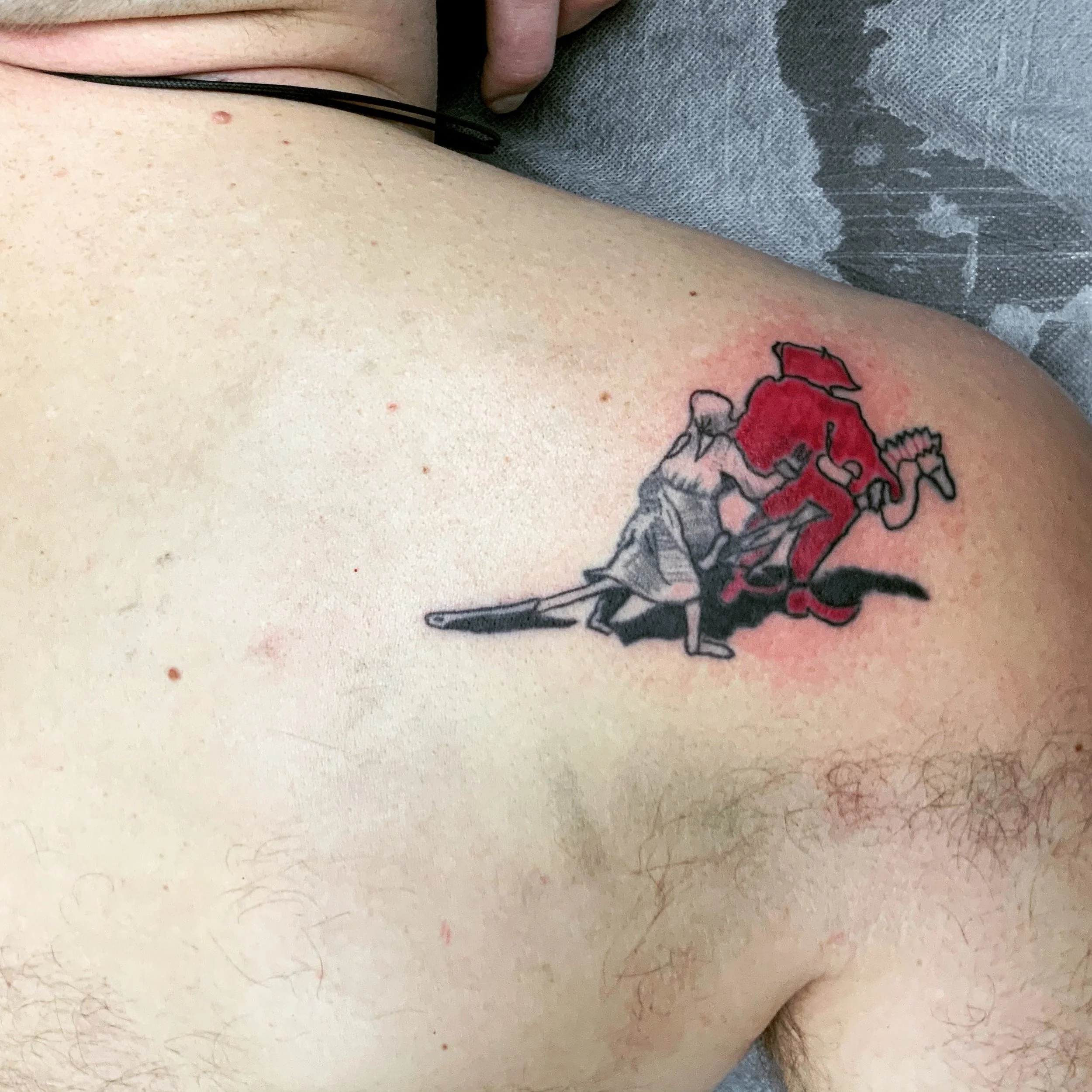
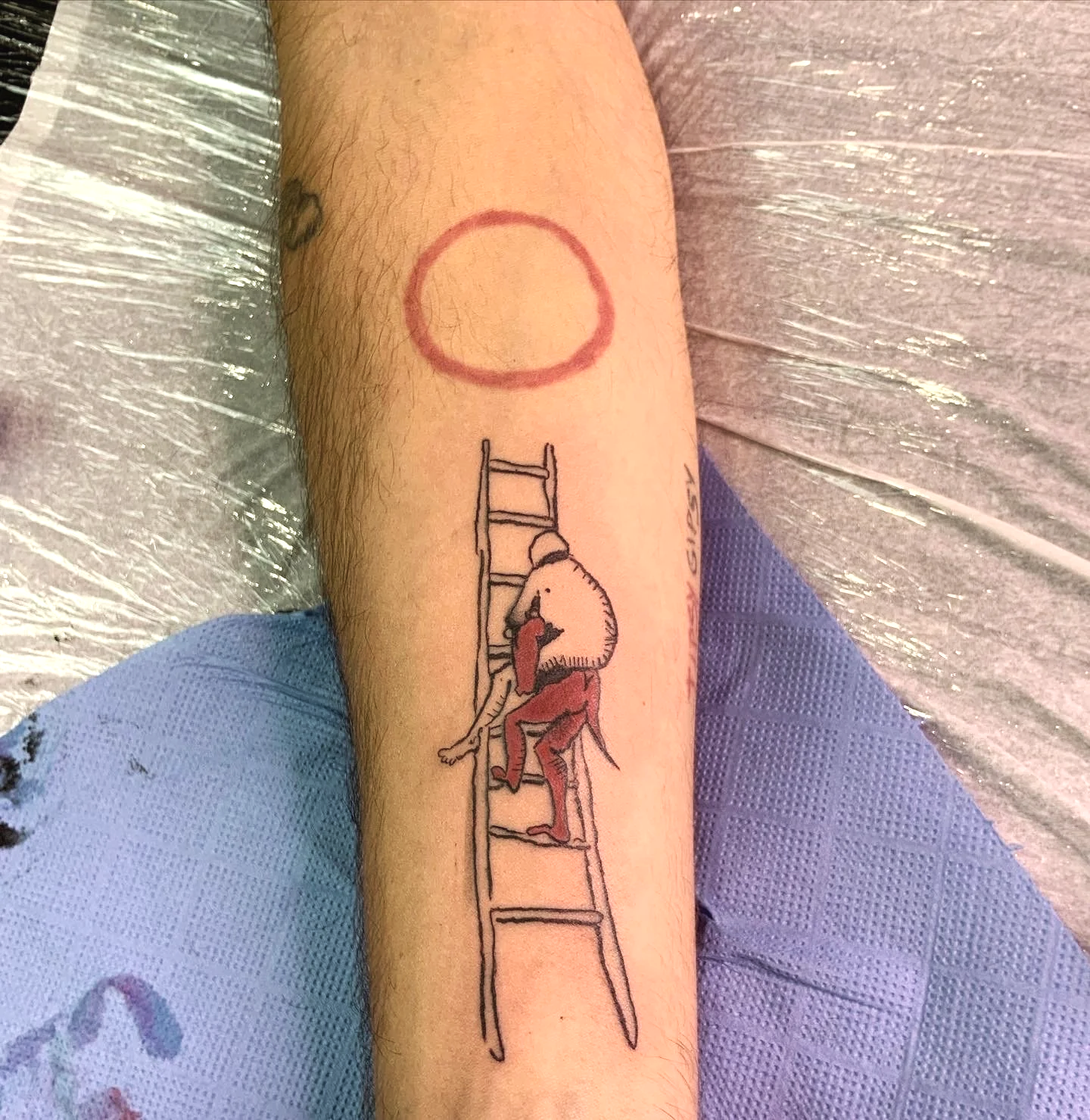
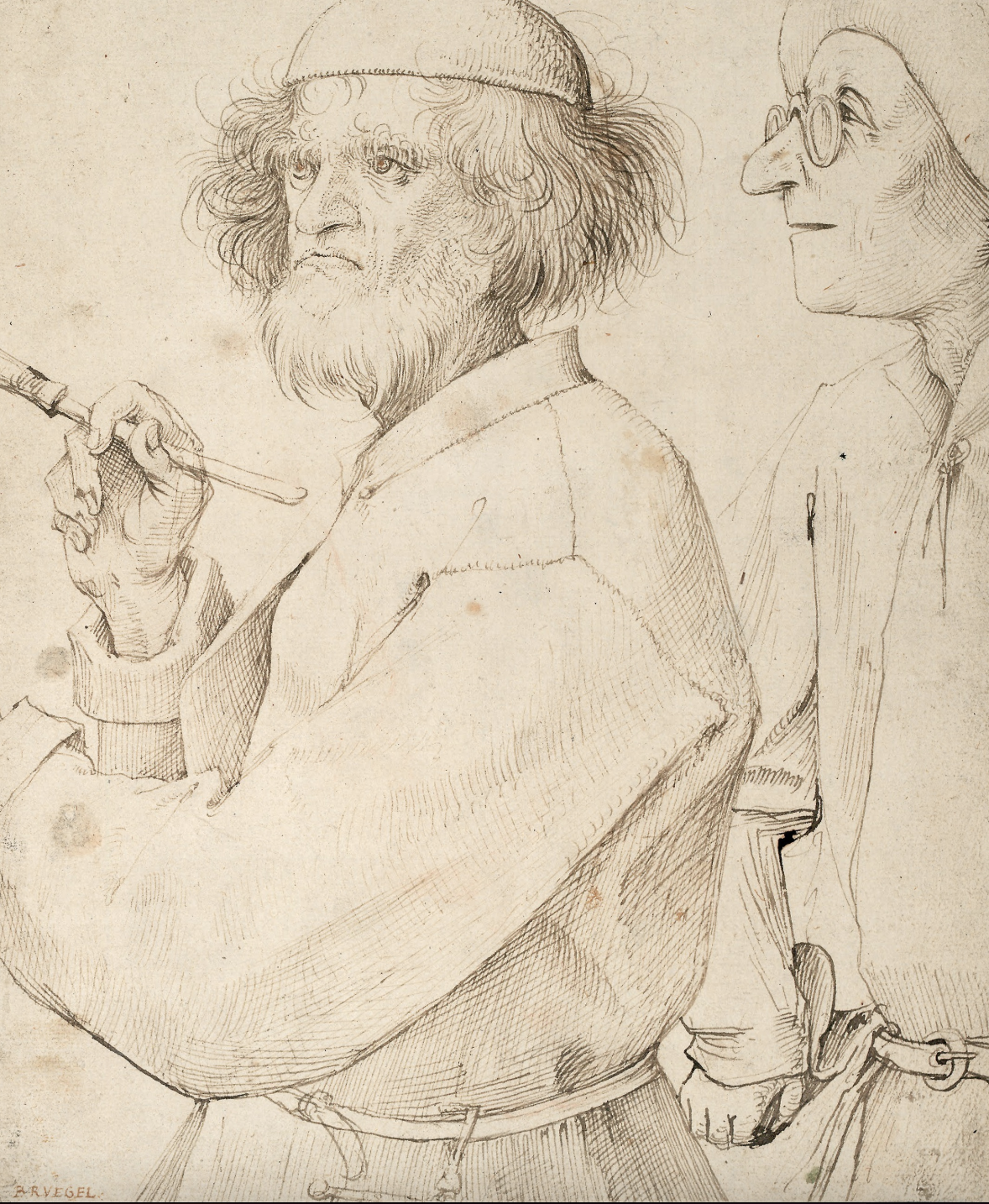
I have made a handful of small tattoos inspired by Bruegel’s work, and every time I return to him I am reminded of why his images still feel so contemporary. Despite the centuries that separate us from them, they do not feel distant or safely historical. They feel sharp, unsettling, and alive.
Bruegel’s world is crowded with twisted figures, unstable bodies, strange gestures, and faces pulled into grotesque expressions. At first glance, some of these figures can seem almost playful: small absurd details hidden inside larger scenes, monsters tucked into corners, bodies behaving badly, images that appear funny before they become uncomfortable. But the longer you stay with them, the harder it becomes to laugh without also feeling implicated.
What Bruegel is really doing is observing people with brutal clarity. He does not idealise and he does not soften. His images present society as a dense and chaotic field where everything happens at once: violence beside humour, folklore beside cruelty, celebration beside collapse. The scenes are fragmented, crowded, and contradictory. Nothing is clean. Nothing is fully resolved.
That is what makes the grotesque in his work so powerful. Monsters, peasants, demons, fools, and hybrid bodies are not there simply to entertain. They expose something. Bruegel uses distortion as a tool of observation, almost as a form of anthropology. Fear, greed, stupidity, desire, power, fragility, and confusion all appear inside those uncomfortable figures. The humour is never innocent. It is often the disguise that allows the truth to enter.
That layered strangeness has always drawn me in. Looking back at some of my earlier tattoos, I can see how present that influence already was, even before I fully understood it. I did not yet have the technical control I have now. The lines were less precise, the decisions less deliberate, but the fascination was already there. Those Bruegelian bodies — unstable, expressive, and uncomfortable — were already shaping the way I thought about figures on skin.
One of the tattoos came from a black-and-white drawing connected to Bruegel’s world: a group of figures being led toward a boat. The image is ambiguous. It is not clear where they are going, or whether they should be following at all. There is movement, but also unease. It feels like a procession, but not a safe one.
When I translated it into tattoo, I imagined the leading figure in red. That choice was not about drama for its own sake. The red gave the figure a different role: part guide, part warning, part seduction. Someone who promises direction, but might also lead you somewhere you cannot return from. That tension felt close to the source. Bruegel’s images often work in exactly that space, where the comic and the dangerous occupy the same body.
The tattoo is a small piece, but it carries weight for me. Not because it is perfect, but because it marks a beginning. A moment when certain questions were already present, even if I could not yet articulate them fully. Questions about bodies, distortion, humour, violence, and the way uncomfortable truths often hide behind exaggeration.
Bruegel’s universe continues to echo through my work, whether I am drawing in charcoal or tattooing skin. Not as quotation, and not as historical decoration, but as an attitude. A permission to let figures be strange. To let bodies misbehave. To accept that clarity does not always come from order.
Sometimes it comes from chaos.
What interests me most is that these monsters do not feel like creatures from nightmares. They feel closer than that. They come from the strange space between reality and imagination, where human behaviour becomes exaggerated just enough to reveal itself. Bruegel understood that the grotesque is not separate from ordinary life. It is ordinary life pushed slightly further, until we can finally see it.
That is why his images still feel contemporary. They remind us that the most honest images are not always the ones that comfort us. Sometimes they are the ones that make us laugh first, and only later realise what we were laughing at.
nOT
References:
Bruegel’s complete works at the Kunsthistorisches Museum, Vienna: https://www.khm.at/en/objectdb/?artist=Bruegel,%20Pieter%20der%20%C3%84ltere
Bruegel’s work https://www.wikiart.org/en/pieter-bruegel-the-elder
The Bruegel family and their artistic legacy (Metropolitan Museum of Art): https://www.metmuseum.org/toah/hd/brue/hd_brue.htm
Interactive exploration of The Tower of Babel (Museum Boijmans Van Beuningen): https://collectie.boijmans.nl/en/object/287586
The World of Bruegel in Black and White – full print collection (Royal Library of Belgium): https://belgica.kbr.be/bruegel/
