Frankfurt Parlament
For the design, we chose the architectural footprint of the building


This tattoo was made at Visions of Ecstasy in Berlin for @glingalex.
The request was very specific from the beginning. The client wanted a tattoo connected to the Frankfurt Parliament, combined with the stars of the European Union, and placed on the knee. That placement mattered. The knee is a joint, a point of movement, a place that bends, carries weight, and never stays still. For a tattoo about political history, structure, and collective ideals, that felt immediately appropriate.
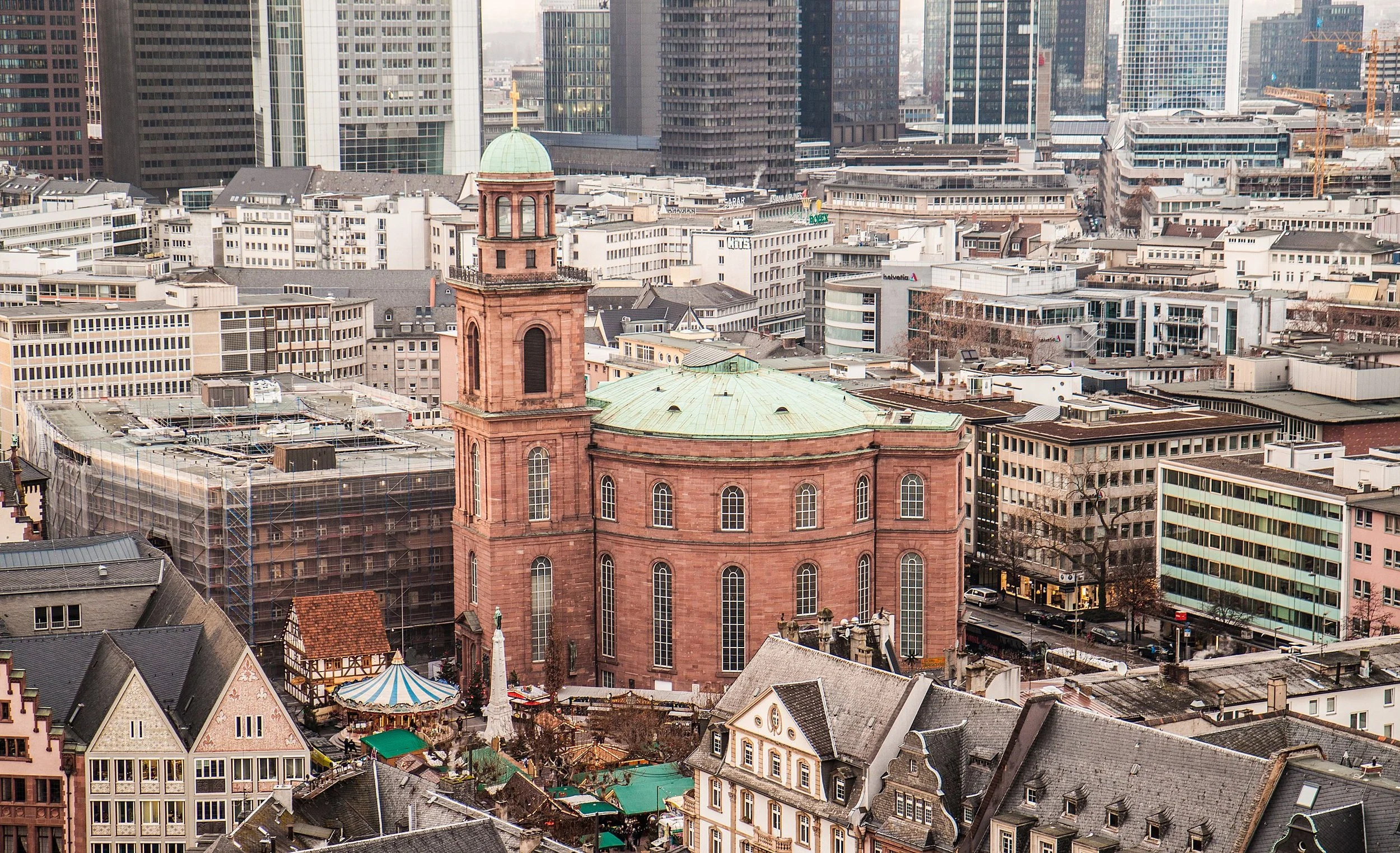
The Frankfurt Parliament met in 1848 at St. Paul’s Church, the Paulskirche, in Frankfurt. It was the first freely elected assembly intended to represent the German states as a whole, and it attempted to draft a democratic constitution based on ideas of freedom, representation, and national unity. The project was ambitious, fragile, and ultimately unsuccessful. The constitution was never fully realised, and the political momentum collapsed under pressure, internal division, and resistance from existing powers.
And yet the Frankfurt Parliament remains one of the most important symbols in German democratic history. Not because it succeeded, but because it tried.
That tension between intention and outcome became the centre of the design. Rather than using a direct image of the building, we chose the architectural footprint. The floor plan. The structure beneath the structure. It felt more precise than a façade, and more honest. The client was not carrying the image of a monument, but the shape that once held people, voices, arguments, and hopes.
A floor plan does not perform grandeur. It simply describes space: where people gathered, where they moved, where decisions were attempted. In that sense, it becomes almost intimate. Less about architecture as monument, more about architecture as a framework for human action.
Placing that structure on the knee changed the image again. The plan bends, shifts, and moves with the body. It refuses to remain static. That movement connects directly to the ideas behind the tattoo. Democracy is not fixed. It is not something completed once and then preserved without effort. It moves, adapts, struggles, sometimes collapses, and sometimes reappears in new forms.
The stars of the European Union extend the design beyond Germany. They connect the historical moment of 1848 to a wider European project still shaped by questions of borders, unity, belonging, identity, and shared responsibility. The EU stars do not resolve the story. They do not turn failure into success. They simply acknowledge that the questions raised by the Frankfurt Parliament never disappeared. They changed scale. They shifted context. But they are still with us.
What I appreciated most about this project is its quietness. There is no heroic figure, no dramatic scene, no obvious political slogan. Just an architectural trace and a familiar symbol, placed on a part of the body that exists entirely in motion. A reminder that history is not only something we study from a distance. It is something we carry, bend with, and move through.
The tattoo holds a single footprint, but inside that footprint are ideas that remain unfinished: democracy, participation, belonging, representation, and the constant effort to imagine a collective future.
Sometimes a building does not need to stand anymore to keep supporting weight.
Text by noTATTOO Berlin.
References:
