Diana as Huntress
One of the most powerful images of Diana I’ve seen is in marble
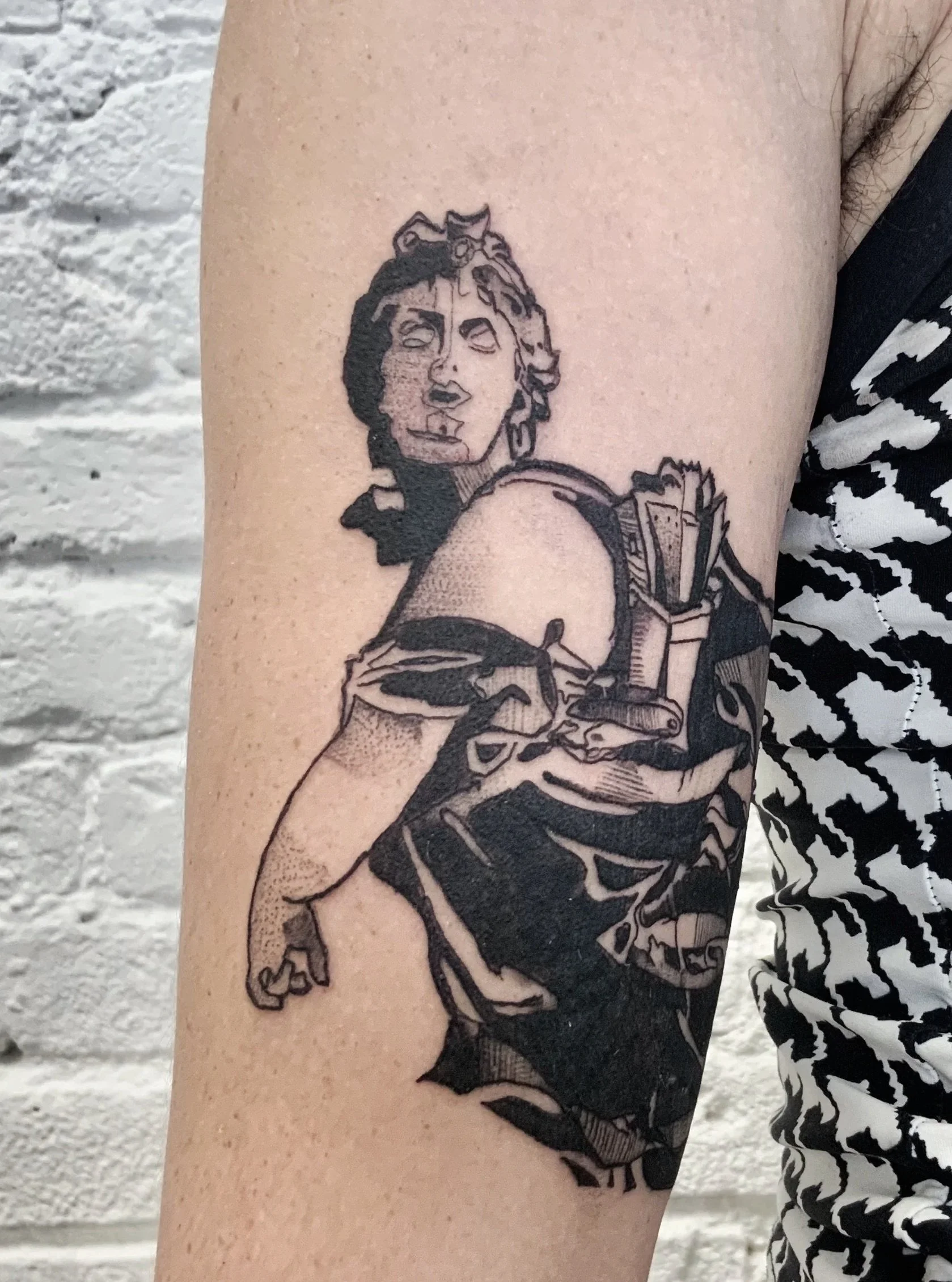
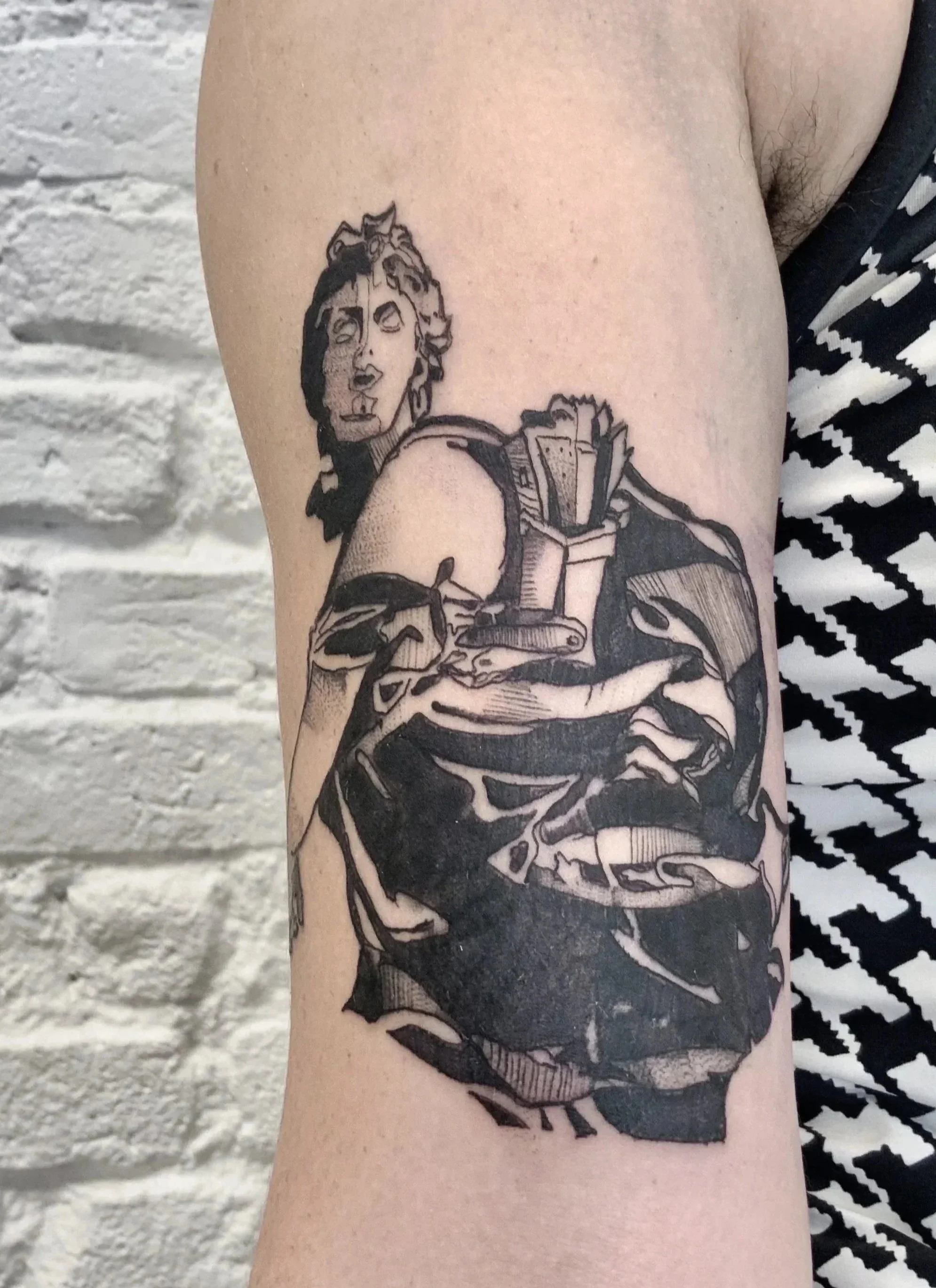

This tattoo was made in Berlin at @visionsofecstasy for @gwen_heywood.
One of the most compelling representations of Diana I have encountered is a marble sculpture made in Rome around 1717: Diana as Huntress by Bernardino Cametti. The first thing that stands out is not scale or ornament, but posture. Diana is caught mid-step, bow in hand, her body slightly turned as if moving through space rather than posing for it. The robe follows the movement with control and precision. Nothing feels exaggerated. Everything feels intentional.
There is strength in the figure, but it is never forceful. The tension is held rather than displayed. She appears alert, but not aggressive. Calm, but not passive. The sculpture does not depict a moment of attack or triumph. Instead, it captures readiness — a state of awareness rather than action. Cametti balances beauty and restraint in a way that keeps the figure grounded. You sense both the goddess and the wildness she belongs to, without either overpowering the other.
Diana is often reduced to a single role: goddess of the hunt. In Roman mythology, however, her presence extends far beyond that. Under the name Diana Lucina, she was associated with childbirth, light, and the beginning of life. Her domain included the moon, animals, forests, and thresholds — spaces that exist between states rather than within fixed categories.
She watched over girls becoming women. She occupied the line between nature and the city, between independence and care. What defines her is not domination, but guardianship. Her authority comes from attentiveness rather than conquest. She does not impose order. She maintains balance.
That understanding of Diana stayed with me throughout the process. Not the image of a hunter asserting control, but of a figure who moves confidently through uncertainty and protects without needing to announce it. A form of power that is quiet, but constant.
When translating this reference into a tattoo, the goal was not to recreate the sculpture, but to preserve that presence. The focus remained on posture, proportion, and restraint. The design avoids unnecessary detail or dramatic gesture. The image needed to remain clear, composed, and balanced — a figure in motion, yet fully contained.
Like the sculpture itself, the tattoo does not rely on spectacle. It presents a moment that feels suspended: not before action, not after, but during awareness. A figure who knows where she stands and where she is going.
What continues to interest me about Diana is that her strength is never reactive. It does not depend on conflict. It exists regardless of whether it is being tested. That quality translates naturally to skin. It does not require explanation.
This piece carries that same balance: movement without force, protection without control, and authority rooted in clarity rather than dominance. A figure that does not demand attention, but holds it.
references:
“Diana as Huntress” by Bernardino Cametti: https://en.wikipedia.org/wiki/Diana_as_Huntress_(Cametti)
Read more about Diana in Roman mythology: https://en.wikipedia.org/wiki/Diana_(mythology)
