Children’s Drawings…
…and the Parents Who Carry Them
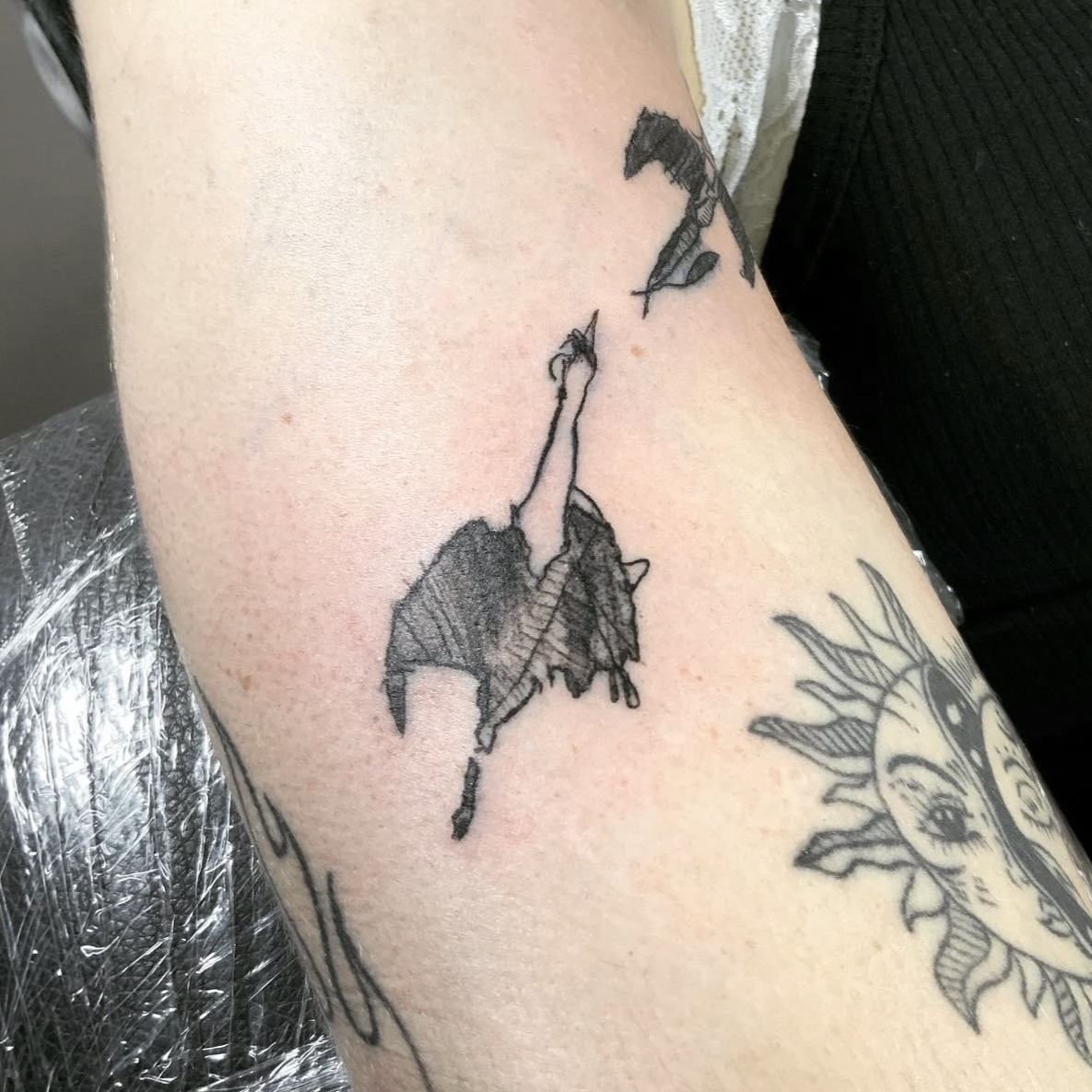
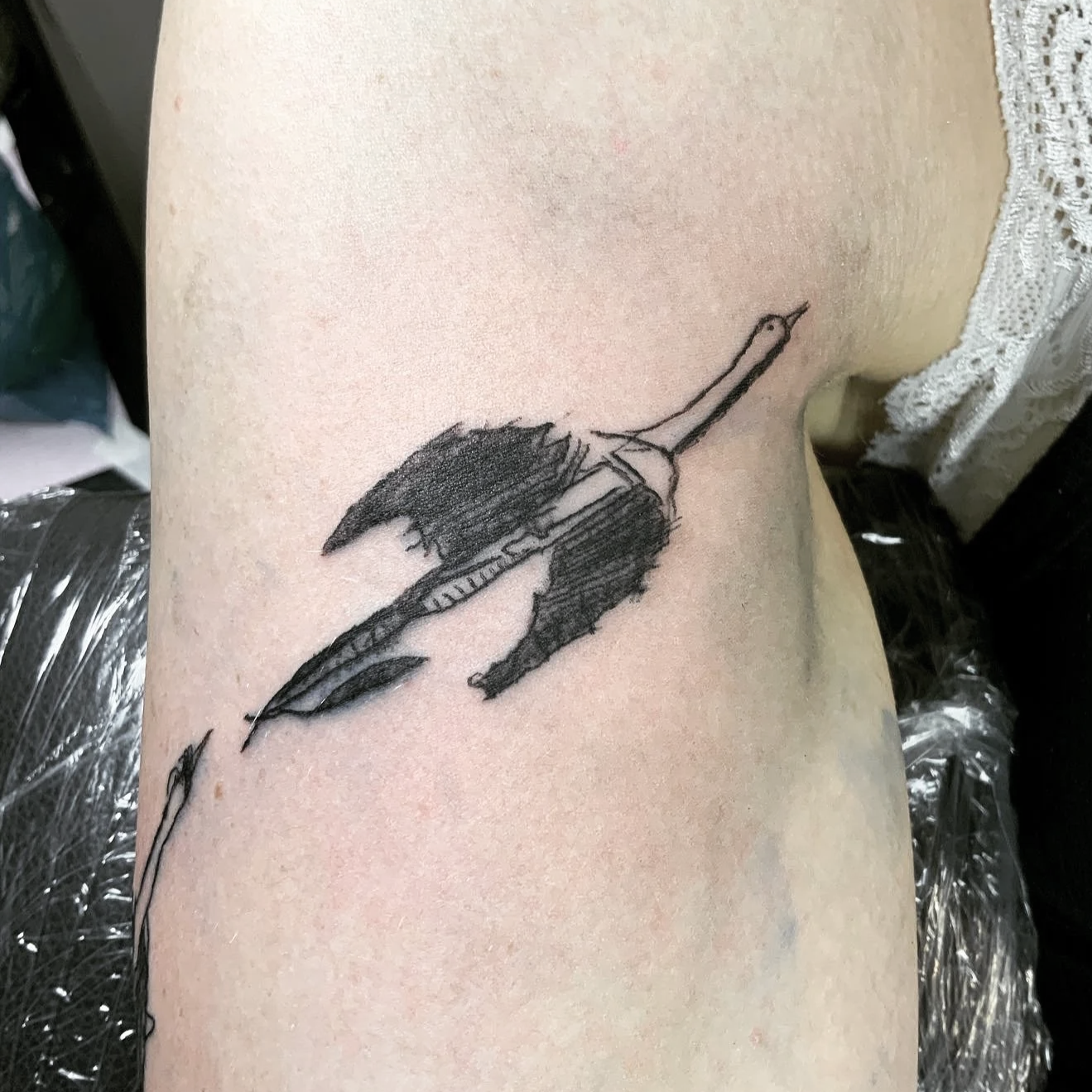
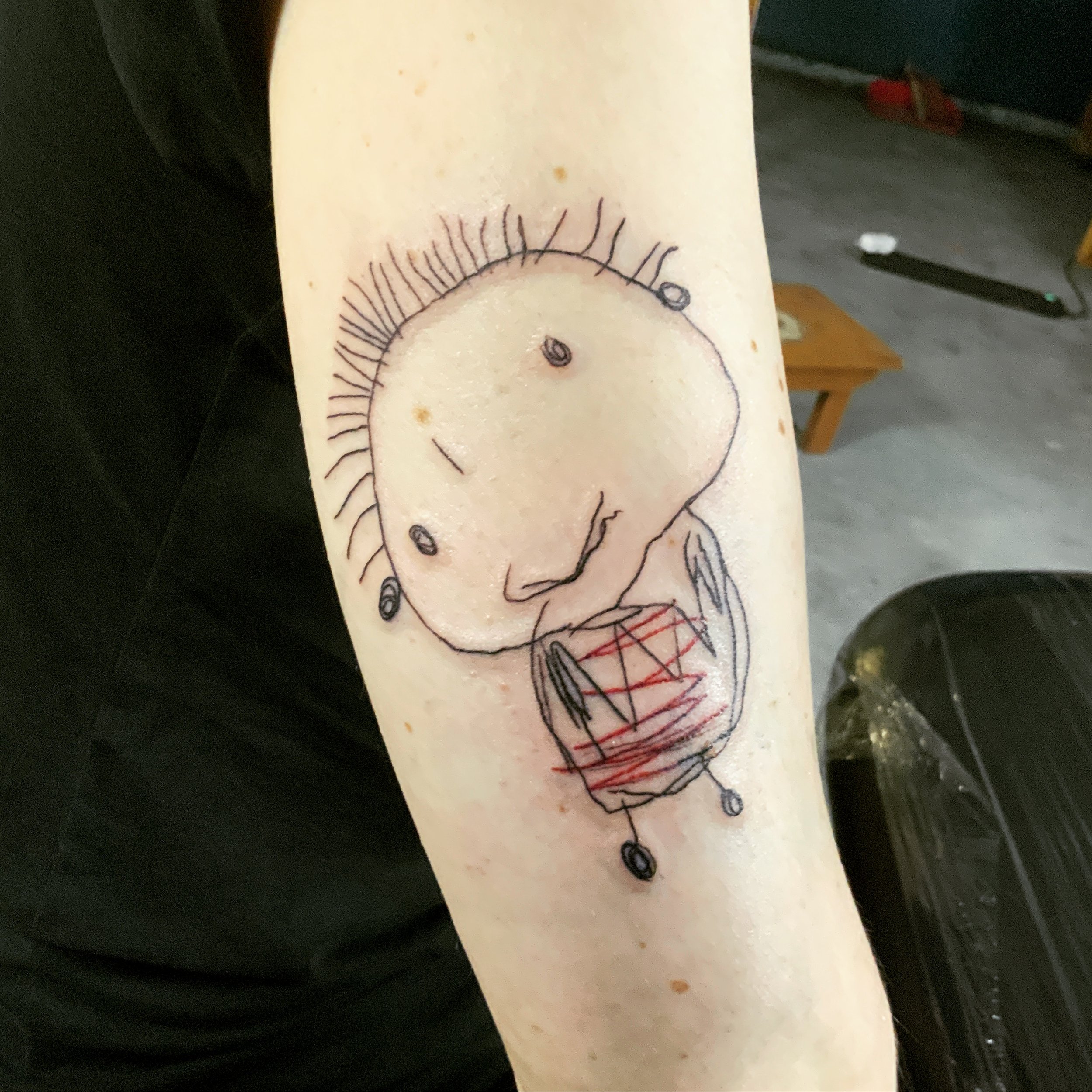
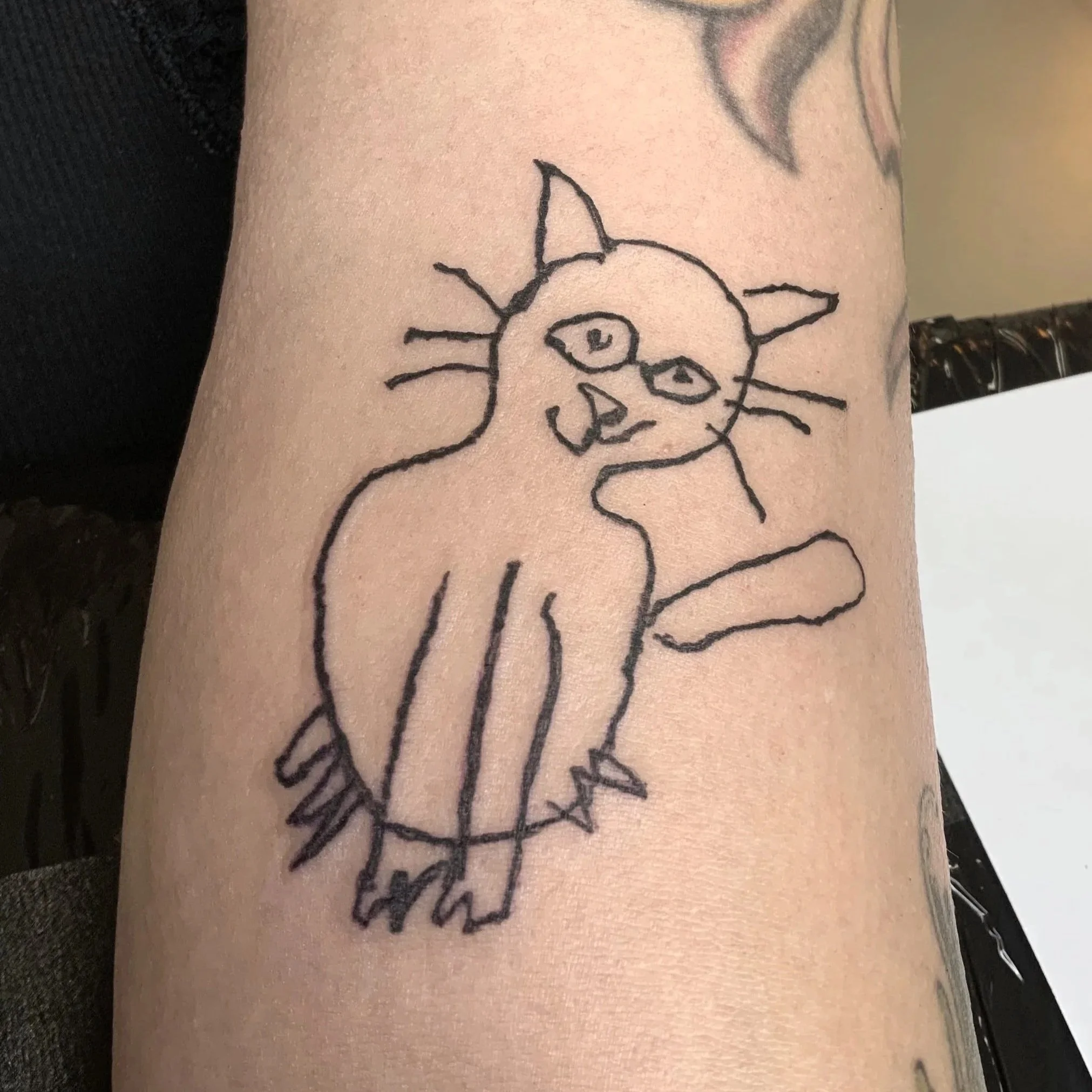
There are many reasons why parents choose to tattoo their children’s drawings. Some want to hold on to a moment that disappears almost as soon as it arrives — those early years when everything is drawn with instinct. No fear. No self-correction. No concern for what is right or wrong. Just marks made because the hand wanted to move. There is a strange honesty in that kind of drawing, something direct and unfiltered that adults slowly lose along the way.
Others see these tattoos as a way of marking the emotional landscape of parenthood itself: the tenderness, the exhaustion, the responsibility, and the love that somehow makes all of those things inseparable. A child’s drawing can hold that complexity without trying to explain it. It simply records it.
For some parents, the tattoo is an act of pride. A way of saying that your way of seeing the world matters, even if it is crooked, even if it ignores the rules, even if it only makes sense to you. For others, there is a quieter awareness behind the decision. Paper does not last. Drawings get folded, lost, forgotten, or left behind between moves. Childhood leaves surprisingly little physical evidence of itself.
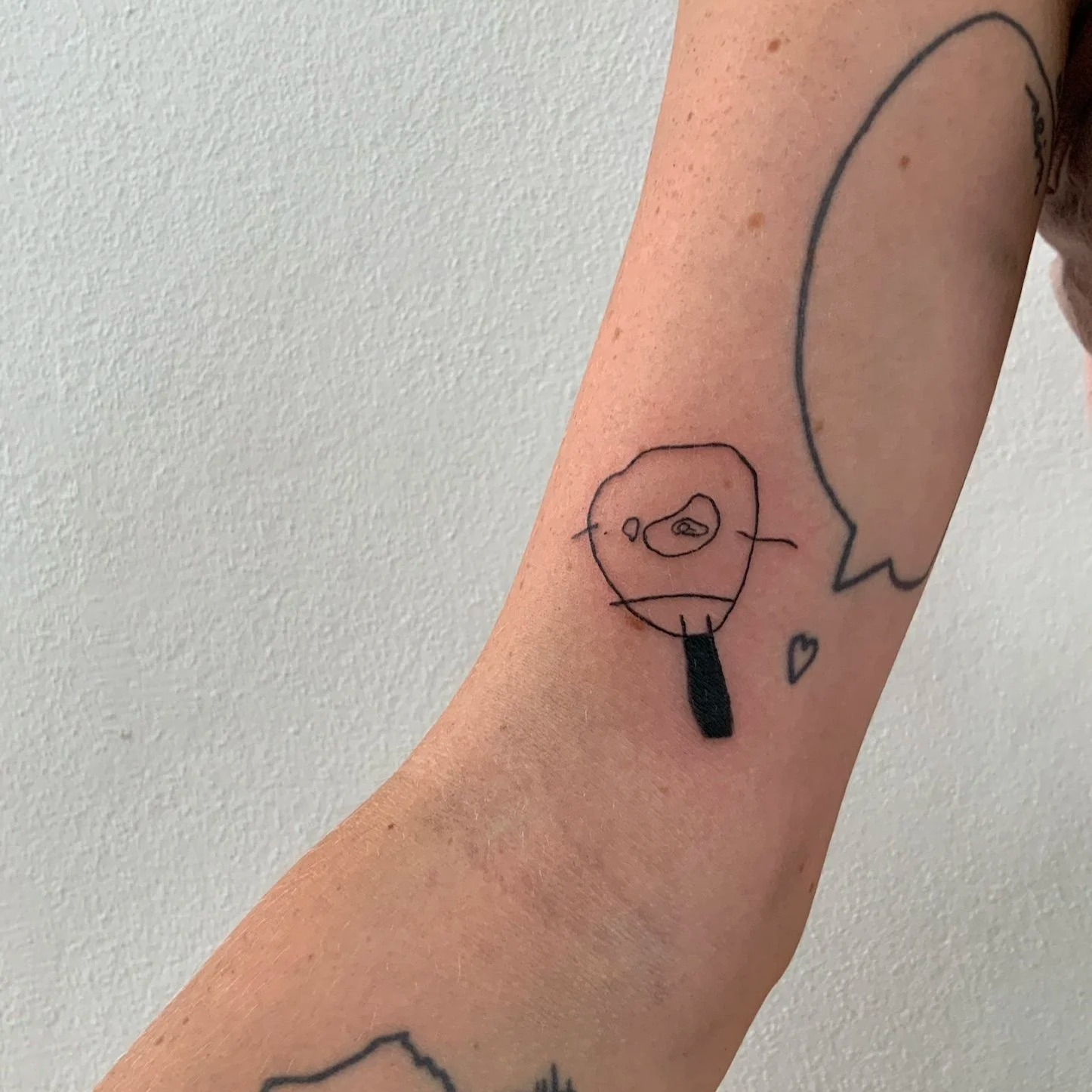
Then there are those who want something even more specific: to see themselves through their child’s eyes. The result can be exaggerated, funny, distorted, or strangely unflattering, but it is almost always honest. Children do not draw what they are supposed to see. They draw what they notice. That perspective can be confronting, tender, and revealing at the same time.
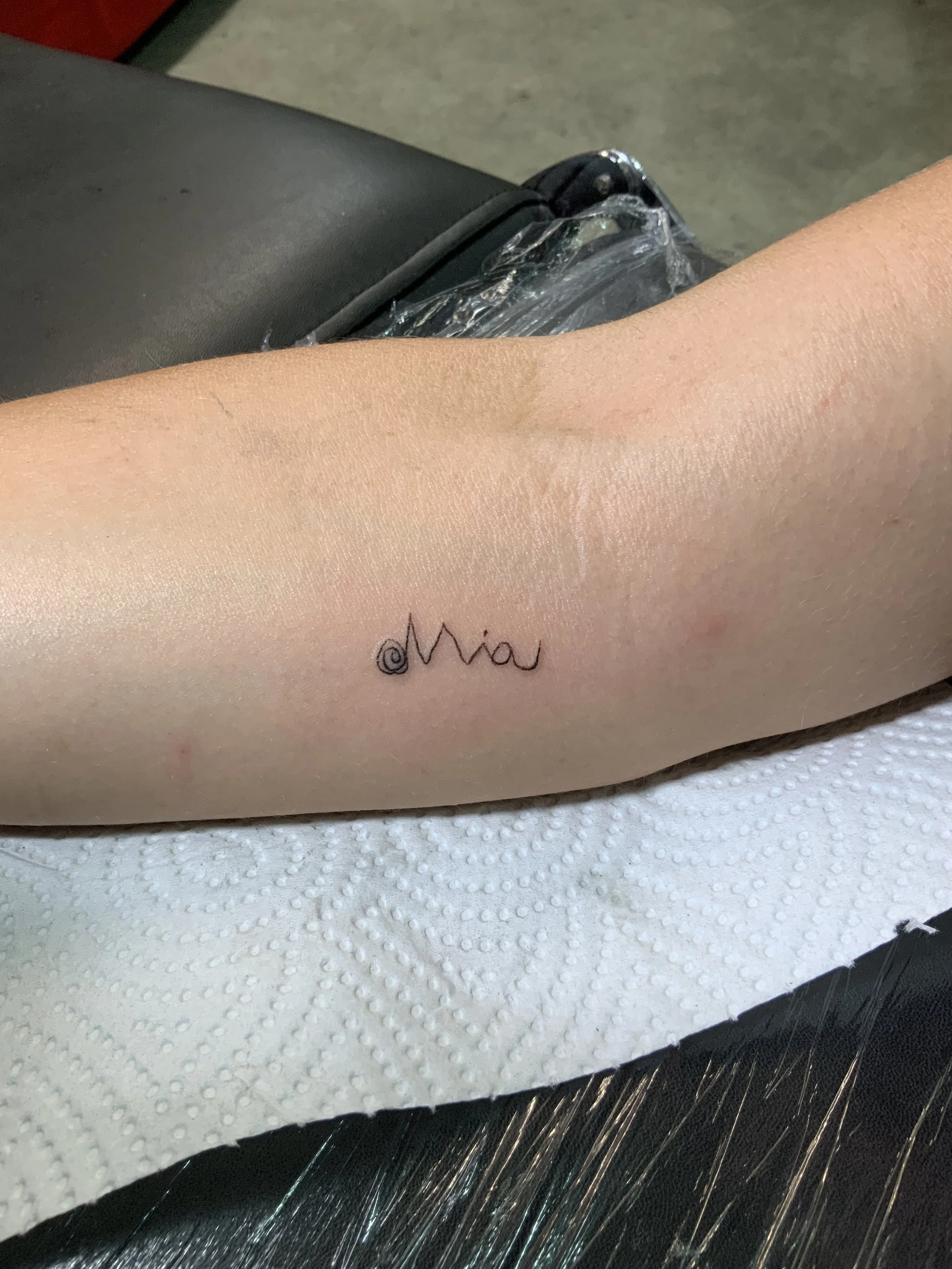
I have tattooed many of these drawings over the years, and they remain some of my favourite projects. More than with most tattoos, I feel a responsibility not to interfere. This is not about refinement. I do not correct proportions, straighten lines, or clean things up. The wobble is the charm. The wobble is the voice. That instability is exactly where the drawing lives. My job is simply to carry it from paper to skin without changing its character.
Before making the stencil, I always break the drawing down digitally — not to improve it, but to understand it. I look at rhythm, pressure, saturation, and the behaviour of the line itself. You can learn a surprising amount from those details. Where the pen pressed harder. Where the hand hesitated. Whether the drawing appeared in a burst of energy or was built slowly over time. Those observations help determine what must remain fragile, what can become more present, and which spaces should remain untouched.
Adults often dismiss these drawings as scribbles. But if you spend enough time looking, there is intention there. Repetition. Emphasis. Decision-making. Even randomness has its own structure. The language is untrained, but it is precise in its own way.
I am sharing some of these tattoos because each one carries more than an image. Each one holds a small story — about the child who made it and the parent who chose to keep it. Children grow, change, leave, and become someone else entirely. But these lines remain. Close to the body that once carried them, protected them, and watched them learn how to see.
It is a quiet gesture. Not sentimental, not loud. Just a way of saying that this mattered, that this moment existed, and that a particular way of seeing the world deserves to last.
Text by noTATTOO Berlin.
References:
“The Dads Getting Tattoos of Their Kids’ Drawings” — GQ https://www.gq.com/story/kid-tattoos
“Parents Get Tattoos of Children’s Artwork” — Business Insider https://www.businessinsider.com/parents-tattoo-children-artwork-doodle-2018-4
Photographic story about a dad getting yearly tattoos of his son’s drawings — Bored Panda https://www.boredpanda.com/dad-tattoo-son-doodles-keith-anderson-chance-faulkner/
Parents getting meaningful tattoos of kids’ art — visual examples & commentary (Pinterest collection of tattoos inspired by kids’ drawings, photos + links https://www.pinterest.com/pin/492649951130075/
Reddit / social video posts where kids design tattoos for their parents (These are user-generated content on Facebook; here’s one example video page) https://www.facebook.com/WatchCut/videos/kids-design-tattoos-for-their-parents/824462371049985/
Articles featuring creative family-inspired tattoos (e.g., birthmarks & solidarity) https://www.boredpanda.com/dad-birthmark-son-father-josh-mash-marshall/ Bored Panda
Books :
Tell Me A Tattoo Story — Alison McGhee (illustrated by Eliza Wheeler) A picture book where a child asks their parent about each tattoo and its story. Includes themes of memory, family, and meaning. https://bookshop.org/books/tell-me-a-tattoo-story/9781452179158 Bookstr
My First Book of Tattoos — Robyn Wall (illustrated by Lydia Nichols) A board book introducing tattoos to young kids through simple rhymes and illustrations — playful, friendly, and family-oriented. https://bookshop.org/books/my-first-book-of-tattoos/9780593487879 Bookstr
My Dad Used To Be So Cool — Keith Negley (tattooed dad, family connection) https://bookshop.org/books/my-dad-used-to-be-so-cool/9780593308064 Bookstr
My Mama Is a Work of Art — Hana Acabado (celebrates caregiver with tattoos) https://bookshop.org/books/my-mama-is-a-work-of-art/9780593375649 Bookstr
My Teacher Has Tattoos — Darren López (addresses tattoos and stereotypes in a child-friendly story) https://bookshop.org/books/my-teacher-has-tattoos/9780593191694 Bookstr
Books Exploring Tattoos & Body Art
These are more general books about tattoos or body art — not specifically about children’s drawings, but valuable for understanding how tattoos carry meaning in culture and identity.
Modern Primitives — V. Vale & Andrea Juno — a foundational exploration of body modification and tattoo culture. https://en.wikipedia.org/wiki/Modern_Primitives_(book) Wikipedia
The Illustrated Mum — Jacqueline Wilson — a children’s novel where a mother’s tattoos play into how her family sees her. https://en.wikipedia.org/wiki/The_Illustrated_Mum Wikipedia
