On the Work of Jorge da Cruz-Jule Graf
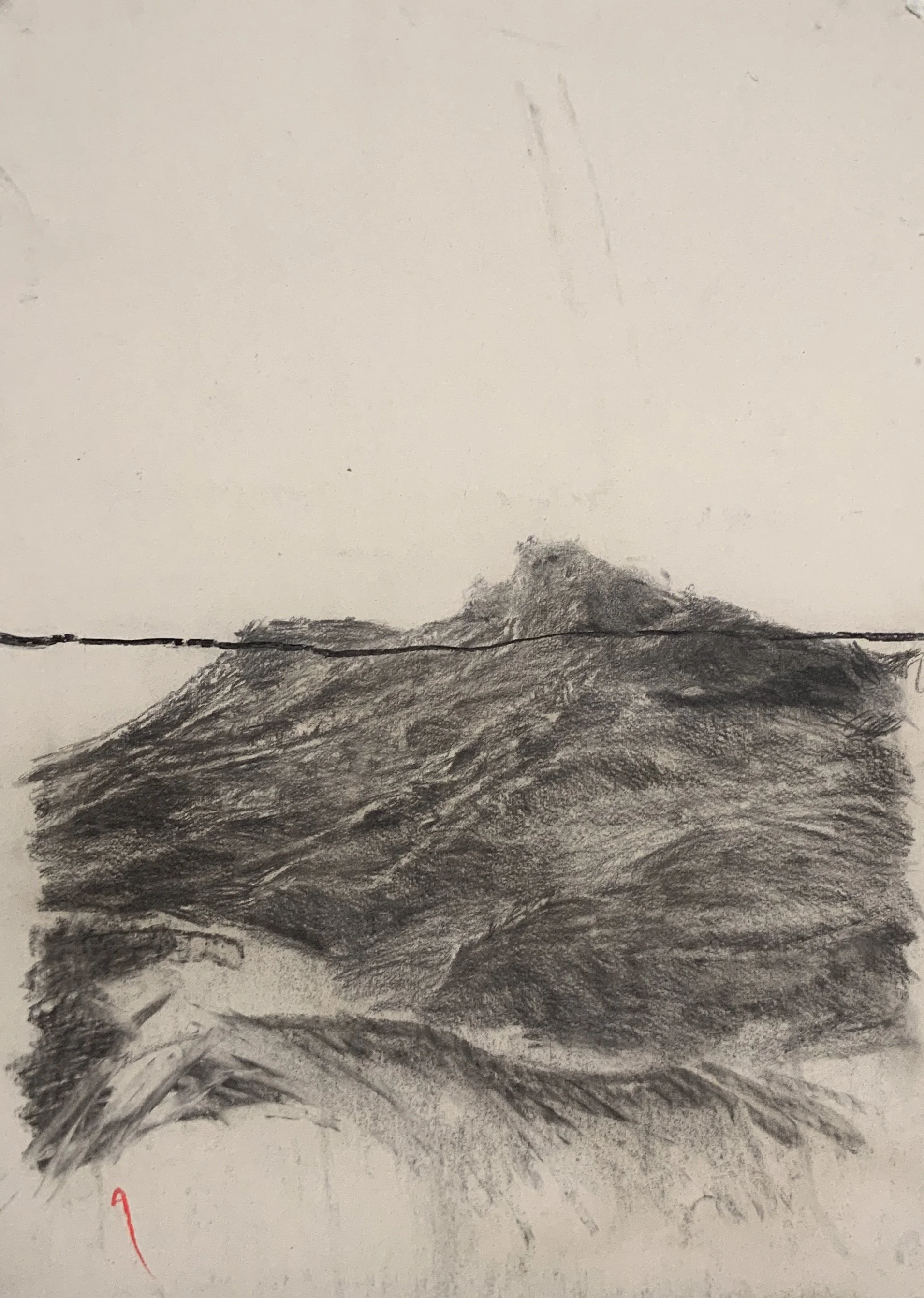
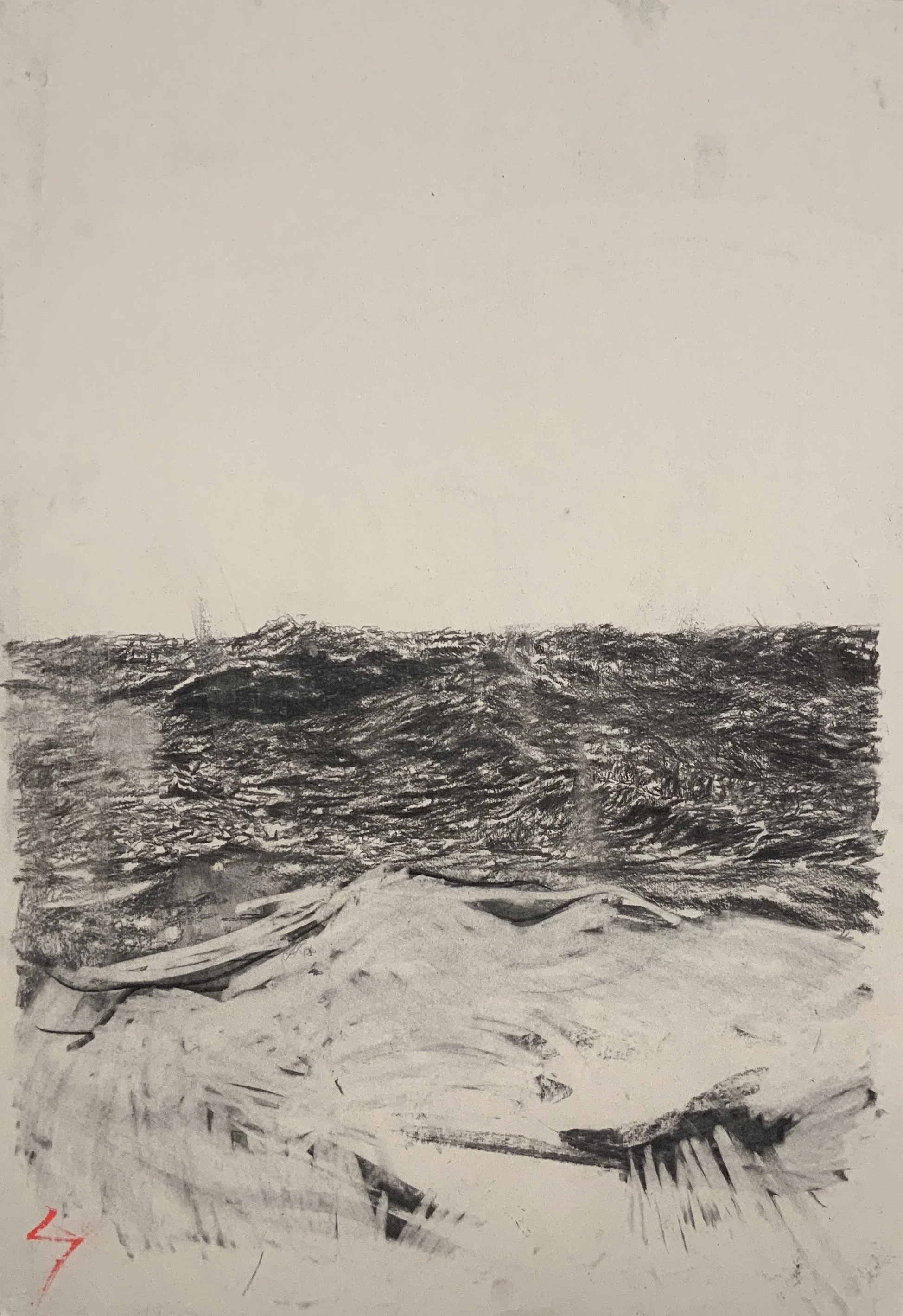
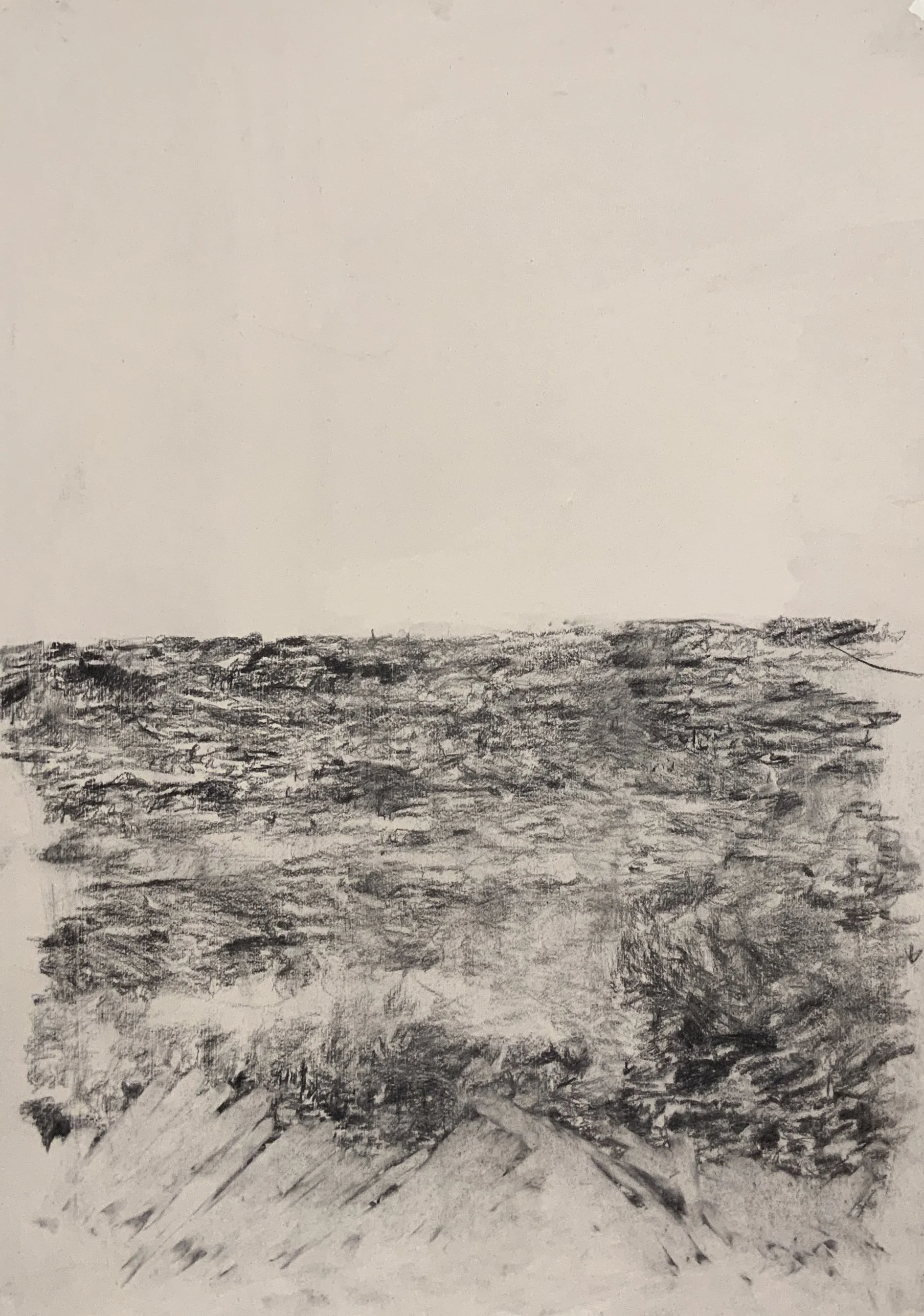
Framing the picture—framing the view. In Jorge da Cruz’s charcoal drawings, this idea becomes more than just a visual device. His work invites us to reflect on how we perceive the world—not just through our eyes, but through memory, emotion, and the quiet architecture of our inner life.
The scenes he creates often feel suspended in time—neither fully here nor fully gone. Figures, spaces, and thresholds emerge through layers of shadow and light, always slightly out of reach. The charcoal medium, with its soft textures and deep blacks, allows for ambiguity. Edges blur. Surfaces breathe. Absence becomes as present as what’s depicted.
Da Cruz doesn’t try to show us everything. His images are intentionally limited, pared down, framed by silence as much as by form. There’s a sense of distance—not a physical one, but an emotional or psychological space. These drawings feel like memories resurfacing, or feelings we can almost name.
Rather than leading us toward a specific narrative, his work opens up a space for pause. For looking slowly. For noticing what’s just beyond clarity. A doorway, a wall, a horizon line—simple elements charged with meaning. His drawings don’t tell us what to see; they ask us to pay attention to how we see.
In this way, Jorge da Cruz’s charcoal works are less about representing the visible world and more about evoking the experience of perception itself—fragile, shifting, and deeply human.