 Image 1 of 2
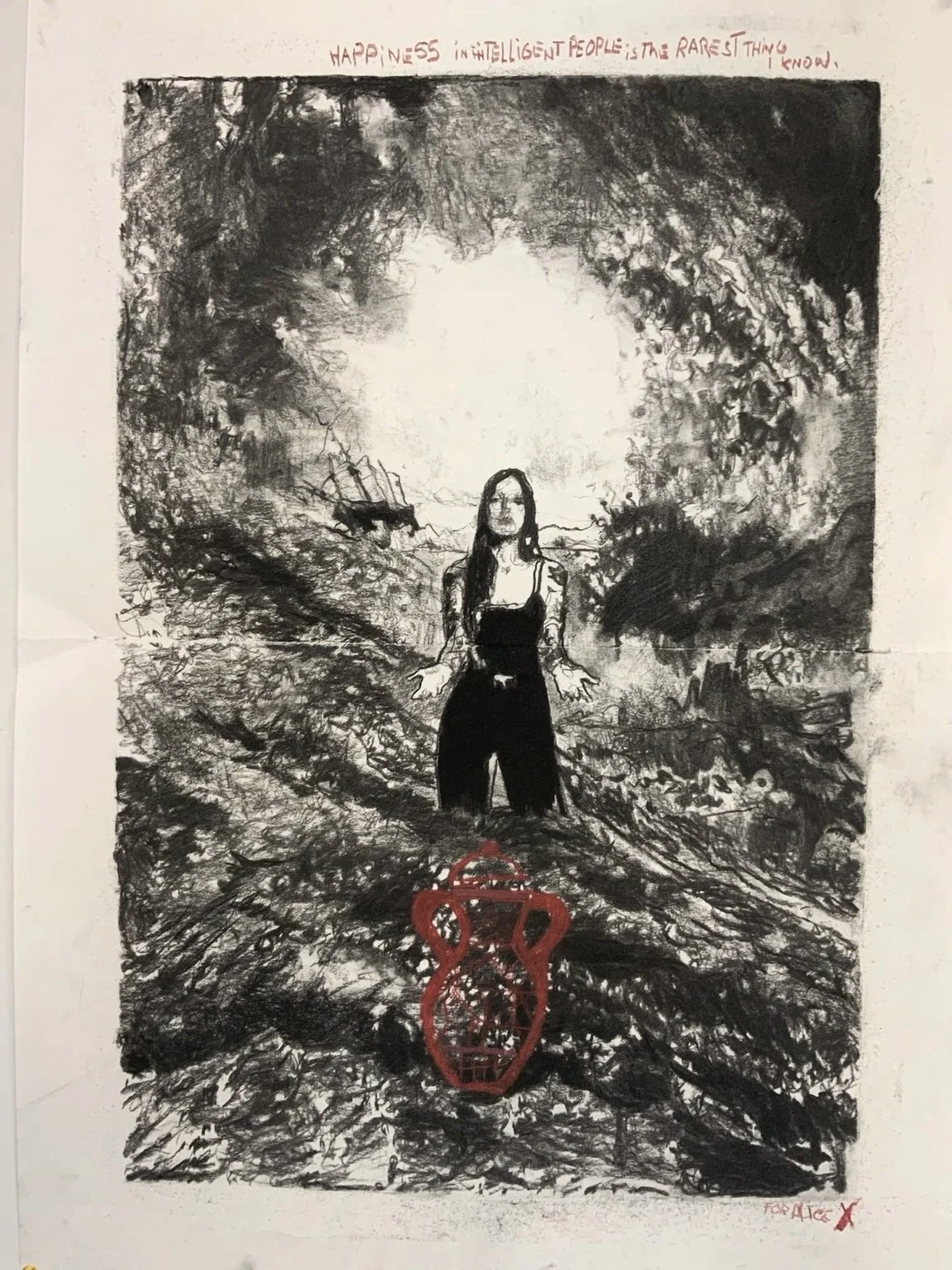 Image 2 of 2
A3 FORMAT (DIN3)
Dimensions: 3508 × 4926mm
Resolution: 300 × 300
Colour space: RGB
Colour profile: sRGB IEC61966-2.1
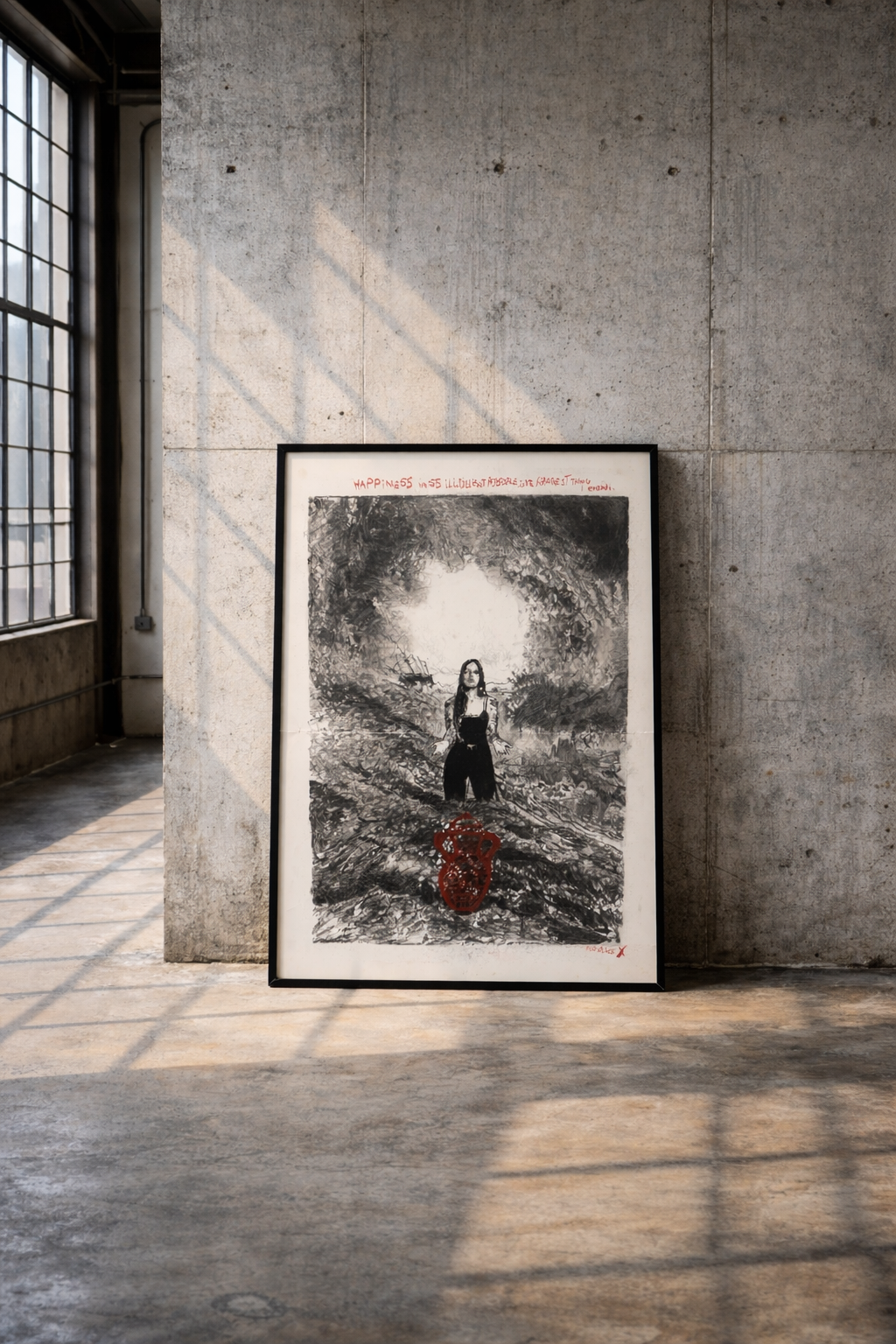
In the image, Alice stands in the centre of a northern landscape. The horizon is almost invisible — sea and sky dissolving into one another, without a clear division or direction. Distance is more present than place.
On the horizon, a ship has run aground and begun to burn. It leans to the right, already unstable, already compromised. It is not an explosion, but something slower — a situation that has passed a point of return.
The movement of the drawing became important to me. I paid attention to how the image should move, how the eye should travel through it. The sky turns in a circular motion, opening the horizon around Alice’s head. The horizon remains pale, almost fog-like, refusing closure. Sky and wave begin to mix, so the weather feels unsettled and unfinished.
A strong diagonal cuts through the drawing. A large wave rises from the left and descends toward the lower right, gaining weight as it moves, about to break. The force of the image travels in that direction — left to right, downward.
Between the ship on the horizon and Alice in the foreground lies the sea. This distance matters. The sea separates them. It is neither violent nor calm. It exists as a space between events.
Below, the water is quieter, forming a base. Different times coexist in the same image: the ship already grounded and burning in the distance, the wave gathering force, and the sea below holding everything together.
Alice remains upright inside this structure. Her arms are open. Palms turned upward. Not theatrical. Not heroic. A body exposed, without defence.
She is small compared to the landscape, but she is the only vertical line in the composition. Everything else moves — circularly in the sky, diagonally in the wave, horizontally across the sea. She stays.
At the bottom of the image, there is a small red vase. Across civilizations, vessels were used to hold what could not remain exposed — ashes, organs, remains. They were necessities before they were symbols. They existed because something needed to be kept.
The red vase sits there, against the charcoal. It holds a different temperature.
If the sea takes, something else stays.
nOT
A3 FORMAT (DIN3)
Dimensions: 3508 × 4926mm
Resolution: 300 × 300
Colour space: RGB
Colour profile: sRGB IEC61966-2.1
In the image, Alice stands in the centre of a northern landscape. The horizon is almost invisible — sea and sky dissolving into one another, without a clear division or direction. Distance is more present than place.
On the horizon, a ship has run aground and begun to burn. It leans to the right, already unstable, already compromised. It is not an explosion, but something slower — a situation that has passed a point of return.
The movement of the drawing became important to me. I paid attention to how the image should move, how the eye should travel through it. The sky turns in a circular motion, opening the horizon around Alice’s head. The horizon remains pale, almost fog-like, refusing closure. Sky and wave begin to mix, so the weather feels unsettled and unfinished.
A strong diagonal cuts through the drawing. A large wave rises from the left and descends toward the lower right, gaining weight as it moves, about to break. The force of the image travels in that direction — left to right, downward.
Between the ship on the horizon and Alice in the foreground lies the sea. This distance matters. The sea separates them. It is neither violent nor calm. It exists as a space between events.
Below, the water is quieter, forming a base. Different times coexist in the same image: the ship already grounded and burning in the distance, the wave gathering force, and the sea below holding everything together.
Alice remains upright inside this structure. Her arms are open. Palms turned upward. Not theatrical. Not heroic. A body exposed, without defence.
She is small compared to the landscape, but she is the only vertical line in the composition. Everything else moves — circularly in the sky, diagonally in the wave, horizontally across the sea. She stays.
At the bottom of the image, there is a small red vase. Across civilizations, vessels were used to hold what could not remain exposed — ashes, organs, remains. They were necessities before they were symbols. They existed because something needed to be kept.
The red vase sits there, against the charcoal. It holds a different temperature.
If the sea takes, something else stays.
nOT