Why noSHBerlin Exists
noSHBerlin exists somewhere between an art project and a clothing label. It is a shop, but it does not want to feel like a traditional shop.
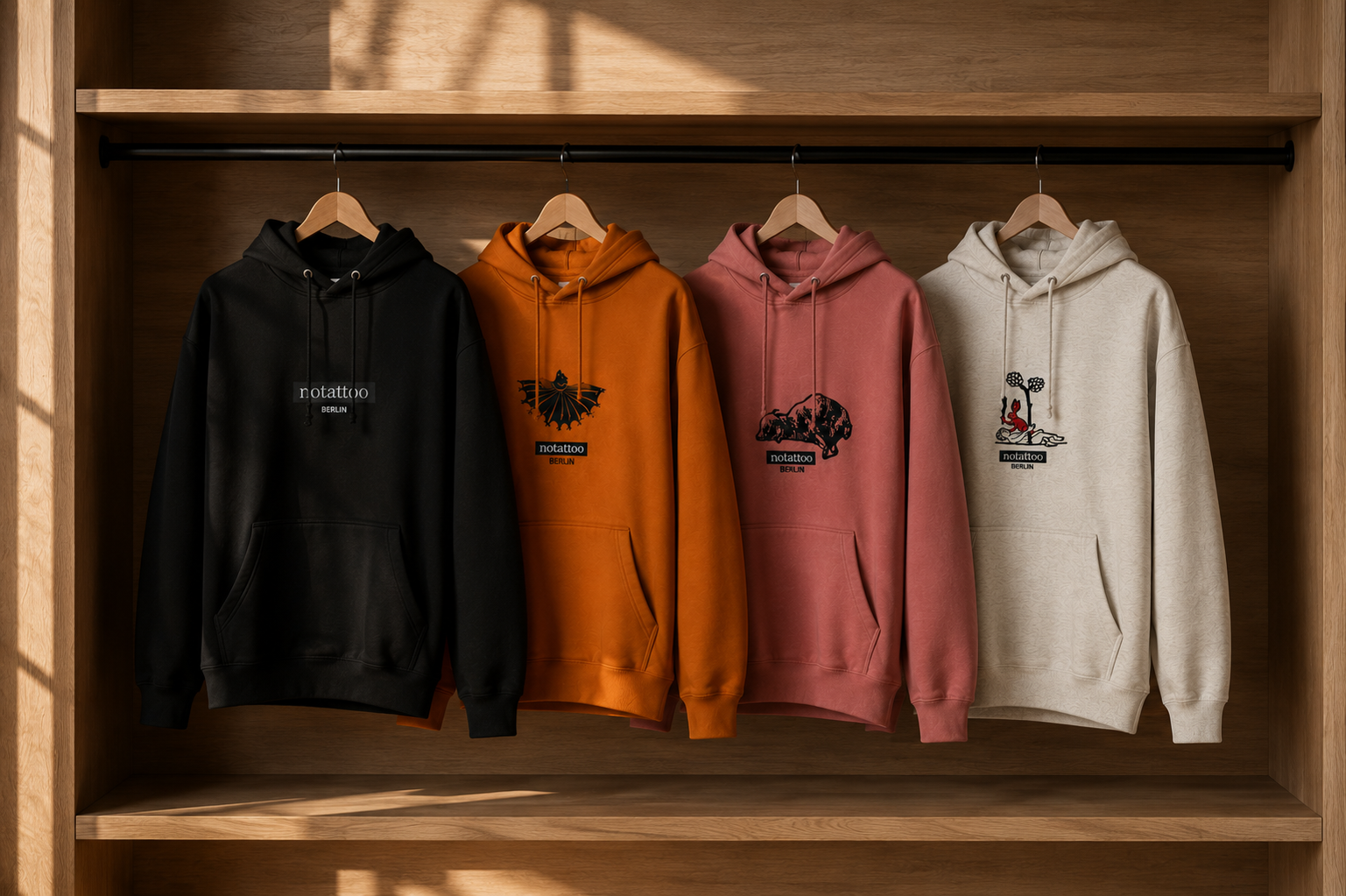
noSHBerlin is a Berlin-based clothing label developed through the artistic and tattoo practice of jorgedacruz. The project emerged from a simple idea: if an image can exist as a drawing, a tattoo, or an artwork, why couldn't it also exist as an object designed for everyday use?
Rather than approaching clothing as merchandise, noSHBerlin treats it as another medium. Images move between paper, skin, embroidery, and fabric, allowing the same visual language to exist in different forms and contexts. A drawing can become a tattoo. A tattoo can become a hoodie. A hoodie can become part of someone's daily life.
The project is rooted in drawing, tattoo culture, classical imagery, and contemporary urban life. It is influenced by the belief that everyday objects can carry the same attention, meaning, and personality often associated with artworks.
The relationship between center and periphery is central to the identity of noSHBerlin. The project is shaped by a suburban perspective and by the experience of moving between different forms of belonging, distance, and participation. Center and periphery are understood not only as geographical realities, but also as cultural and social positions that continue to influence how identities, aesthetics, and visual languages are formed.
noSHBerlin exists somewhere between an art project and a clothing label. It is a shop, but it does not want to feel like a traditional shop. The intention is not to produce endless collections or follow seasonal cycles, but to create pieces that feel personal, durable, and connected to the ideas from which they emerged.
Quality matters more than quantity. Most releases are produced in very small quantities and without restocks, maintaining a closer relationship between the image, the object, and the person who chooses to wear it.
At its core, noSHBerlin is simply another way for drawings, references, and ideas to exist in the world — not as products alone, but as everyday objects shaped by use, memory, and time.