Das Atelier
Text by noT
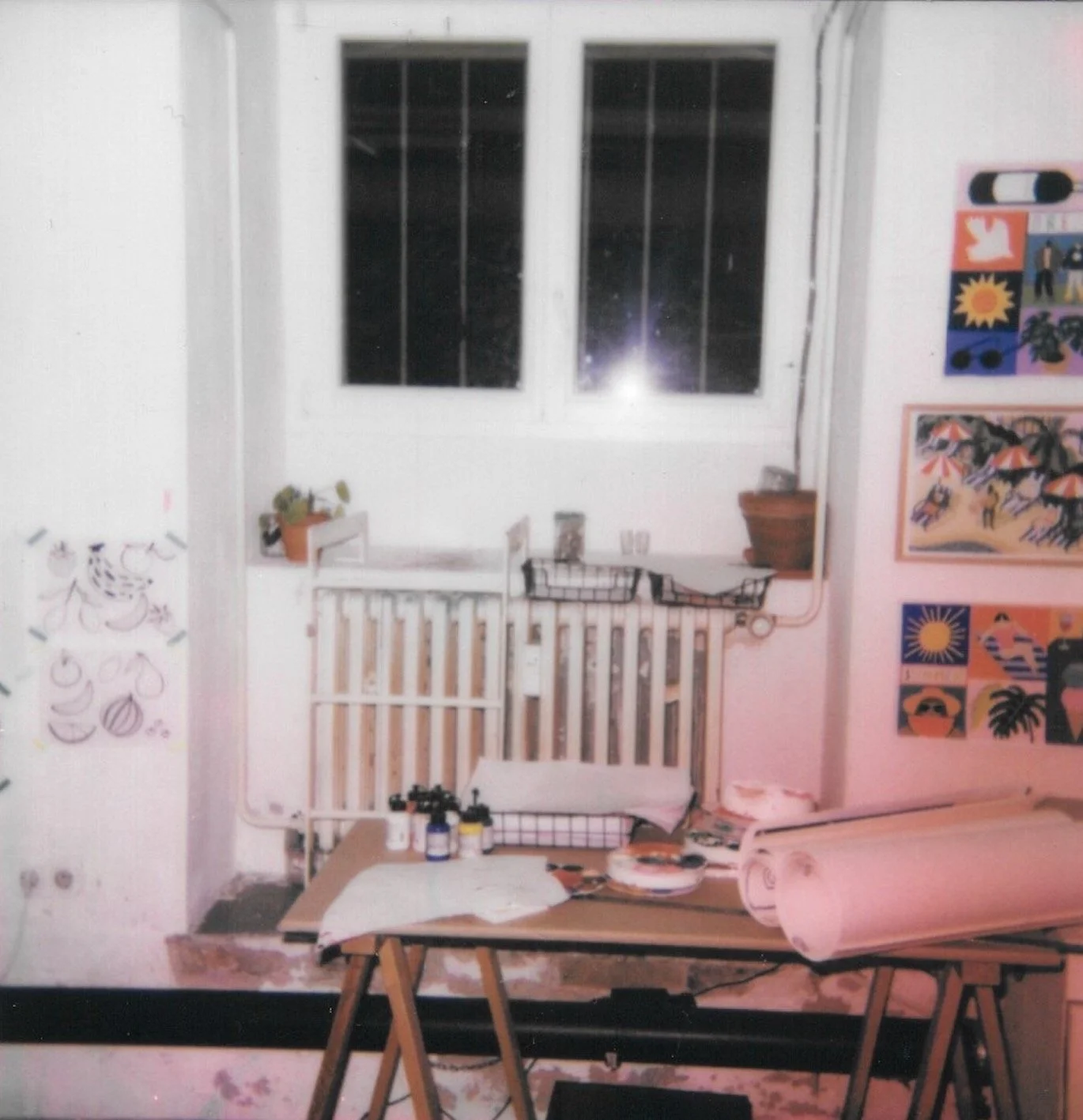
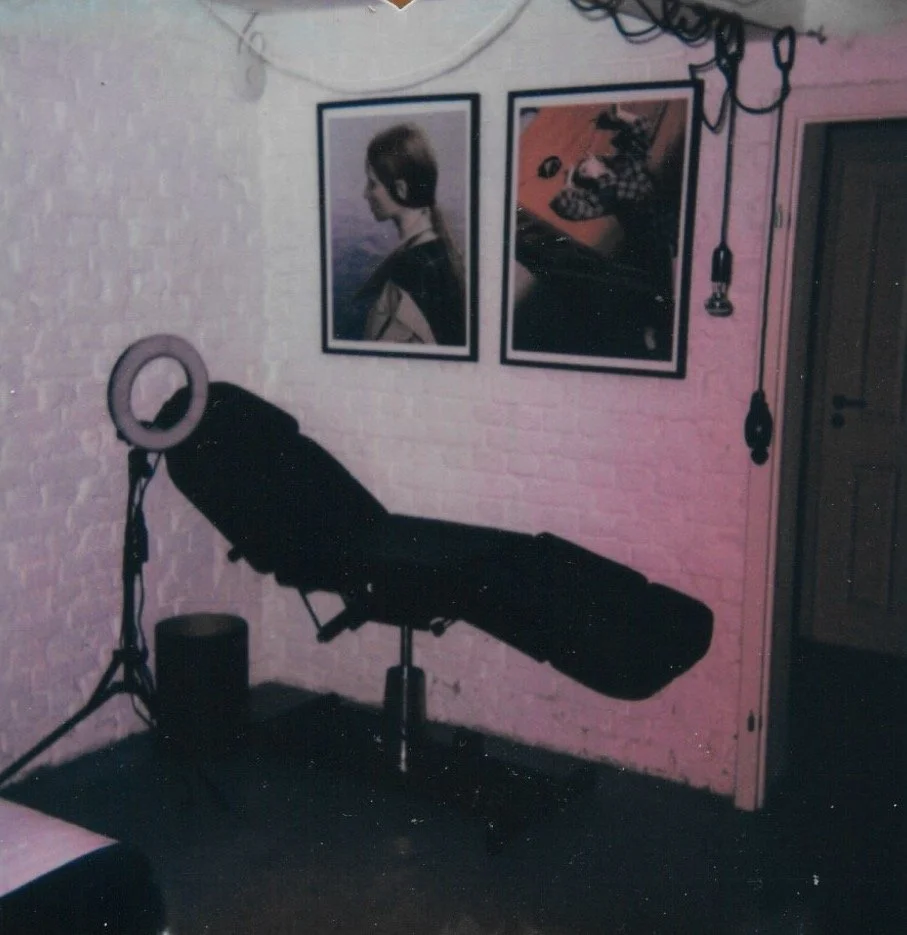
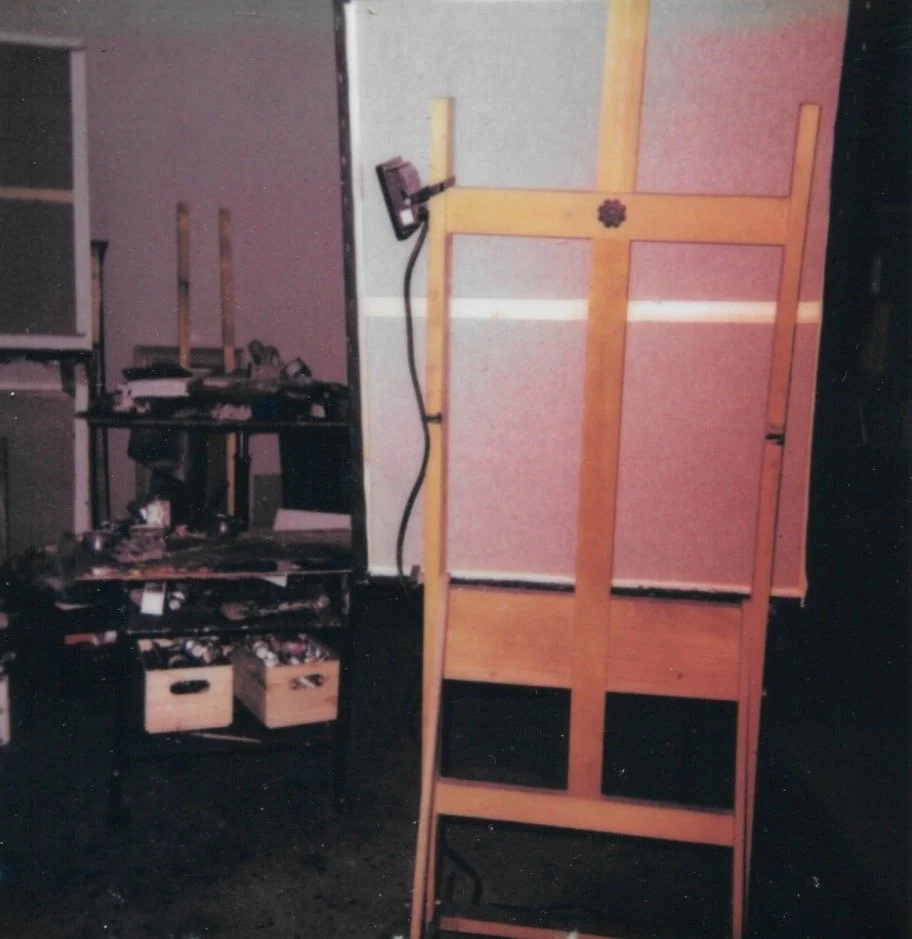
Das Atelier is a photographic series by Jorge da Cruz, produced entirely with a Polaroid 600 camera. The project focuses on artists' studios and creative workspaces, photographed at night in complete darkness. By documenting these environments without the presence of the people who normally occupy them, da Cruz examines the relationship between artistic production, the physical organisation of a working space, and the traces left behind by creative activity.
The artist's studio has occupied an important place in the history of art. Traditionally understood as the environment in which artworks are conceived and produced, it has also been a subject of representation in its own right. Paintings and photographs of studios frequently show artists surrounded by their materials, tools, unfinished works, and objects collected over time. These images often present the studio as an extension of the artist's identity, revealing aspects of their working methods and personal interests.
In Das Atelier, da Cruz approaches these spaces from a different perspective. The artists themselves are absent, and the photographs concentrate on the environments they have temporarily left behind. Working tables, materials, objects, tools, and unfinished pieces become the principal subjects. Without the presence of the people who use them, these elements acquire a different significance, offering indirect evidence of activities that have already taken place or will eventually resume.
The decision to photograph at night is central to the project. Studios are generally organised around the practical requirements of artistic production, particularly access to light, working surfaces, and the arrangement of materials. By photographing them in darkness, da Cruz removes these familiar conditions and changes the way the spaces are perceived. Places normally associated with activity become quiet environments in which objects and their relationships are temporarily separated from their everyday functions.
This change also affects the interpretation of the studio itself. A workspace photographed during the day may reveal how an artist works, while the same room photographed at night can suggest what remains after that activity has stopped. The arrangement of materials, unfinished compositions, and objects left in place provides evidence of decisions, experiments, and interruptions. The absence of the artist does not remove the human dimension of the space; instead, it makes that presence visible through what has been left behind.
The photographs occupy an uncertain position between documentation and interpretation. They record existing environments, but the conditions in which they are photographed prevent them from functioning as straightforward descriptions of those spaces. Darkness obscures certain details while drawing attention to others, changing the relationship between familiar objects and their surroundings. The studio becomes less immediately recognisable as a functional workplace and more open to observation as an arrangement of forms, surfaces, and traces of activity.
The use of a Polaroid 600 camera contributes to this approach. Unlike conventional photographic processes that allow multiple stages of development and printing, instant photography produces a physical image shortly after exposure. Each photograph becomes an individual object, with characteristics influenced by the camera, film, and conditions in which it was taken.
The Polaroid format also introduces a particular relationship between photography and time. Although the image is produced almost immediately, the spaces represented belong to a moment of inactivity. The photographs preserve a brief interval in the daily life of a studio, when work has been interrupted but its physical traces remain. This contrast between the immediacy of the photographic process and the stillness of the subject is an important element of the series.
The absence of human figures also introduces questions about the nature of artistic work. The finished artwork is generally the most visible result of an artist's practice, while the processes surrounding its production often remain less accessible. Studios contain evidence of these processes: abandoned experiments, accumulated materials, unfinished pieces, and tools whose arrangement may reflect particular habits or working methods.
By concentrating on these environments, Das Atelier directs attention towards aspects of artistic production that exist outside the finished work. The studio becomes a place where ideas are tested, interrupted, reconsidered, and occasionally abandoned. Its contents provide a partial record of this activity, even when the artist is no longer present to explain it.
Solitude forms another important dimension of the project. Artistic production is often associated with individual concentration and extended periods of work away from public view. Da Cruz approaches this condition indirectly, photographing the space rather than the person experiencing it. The resulting images suggest a relationship between the physical isolation of the studio and the less visible processes of artistic thought.
At the same time, the photographs do not present these environments as abandoned places. Their contents indicate continuing activity, even when that activity is temporarily suspended. Materials remain available, unfinished works retain their positions, and the organisation of the space suggests that someone may return to continue what has been left incomplete.
Das Atelier examines the artist's workspace as both a practical environment and a record of creative activity. Through the absence of human figures, the use of darkness, and the material qualities of instant photography, da Cruz shifts attention from the artist and the finished artwork towards the conditions in which artistic production takes place.
The series presents the studio as a space shaped by repeated use, individual working methods, and the accumulation of objects and decisions over time. Rather than documenting artistic creation as an event, the photographs concentrate on what remains between periods of activity.
In these images, the studio is temporarily silent, but the evidence of work continues to occupy the space.
noT
das ATELIER • © k37 studio 2023 Berlin