Maria
Jorge da Cruz & Carolin Schmidt
Video installation
Text by noT
Maria begins with one of the most charged maternal figures in religious and cultural history.
Known from the New Testament and the Quran as the mother of Jesus of Nazareth, Maria carries ideas of purity, compassion, devotion, and selfless love. In Catholic tradition, she is venerated as a saint. But through the suffering and death of her son, she also becomes profoundly human: a mother marked by grief.
In this video performance, Maria follows a different logic. Her suffering does not come from a single tragic event. It is chosen, summoned, and almost tested.
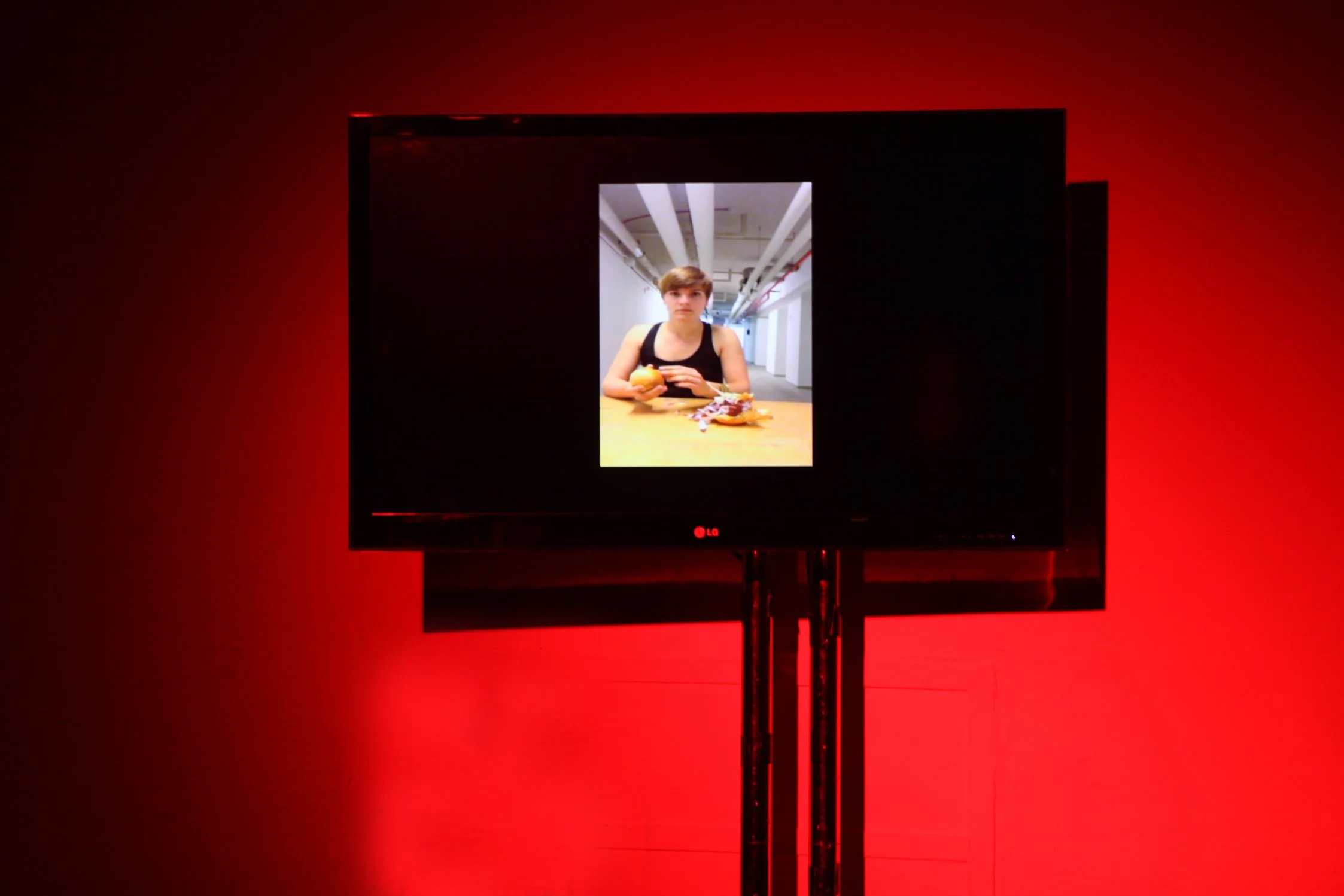
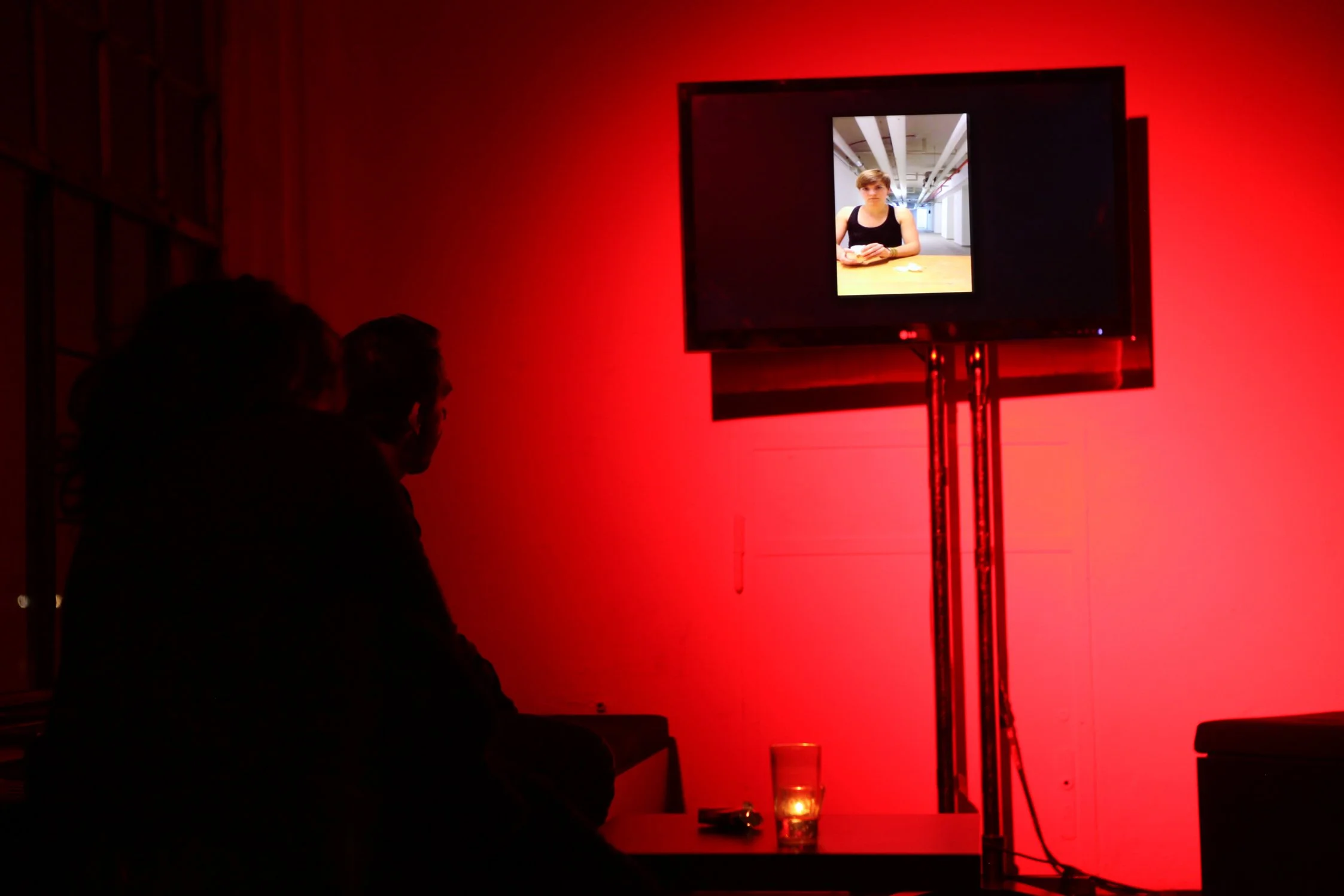
She sits on a wooden table in a dim cellar. Above her, thick pipes run across the ceiling, guiding the eye toward a closed concrete door. The space feels enclosed, functional, and without escape — like a corridor that leads nowhere.
Maria begins to peel an onion.
Her movements are slow and deliberate. Layer after layer is removed and placed carefully into a single pile. Her gaze stays fixed. Her expression remains empty, almost meditative. The action is simple, but it becomes ritualistic through repetition.
A dog occasionally enters the frame, curious and slightly disruptive, jumping up to observe what is happening. Its presence breaks the solemnity without destroying it. The performance stays between seriousness and absurdity.
Maria continues with one clear purpose: to reach the core of the onion. The center becomes symbolic — a small, indivisible object hidden beneath layers. It suggests purity, exposure, vulnerability, and the desire to arrive at something final.
Each removed layer becomes a gesture of unveiling. A shedding of surfaces. A quiet attempt to produce feeling.
But no tears come.
The sequence is interrupted. She begins again with a new onion, then later with half an onion. The effort becomes more insistent. A fly appears over the growing pile of onion skins, introducing a small sign of decay and time passing.
Still, the tears do not arrive.
Maria begins to intervene. She touches her face, runs her fingers along her cheeks, and tries to imitate the sensation of weeping. Nothing happens. Eventually, she rubs a piece of onion beneath her eyes. Then harder, directly against the skin.
Her eyes redden. She blinks. The tension breaks.
Tears begin to fall. Mucus slips from her nose. The pile is complete. The final layers are added.
The act ends when she gathers the peeled pieces into her hands. The core drops. What was being searched for has been reached, but not without force.
Maria is a work about grief, ritual, performance, and the desire to make emotion visible. It asks what happens when suffering becomes expected, repeated, or even demanded. It shows a figure trying to produce tears, not because pain is absent, but because feeling itself has become something to prove.
The struggle has been witnessed.
“Words create thoughts, which cause more questions,
which lead to even more questions —
which put things, and ourselves, into perspective.”
— Carolin Schmidt